Quick answer: Whole home surge protection works by installing a surge protective device at your electrical panel or meter that diverts sudden voltage spikes to ground before they travel through your home's wiring. It responds in a tiny fraction of a second, clamping excess voltage from sources like lightning, utility switching and large appliances. It is designed to work alongside plug-in surge protectors at sensitive electronics, creating layered protection. It reduces risk but cannot stop a direct lightning strike.
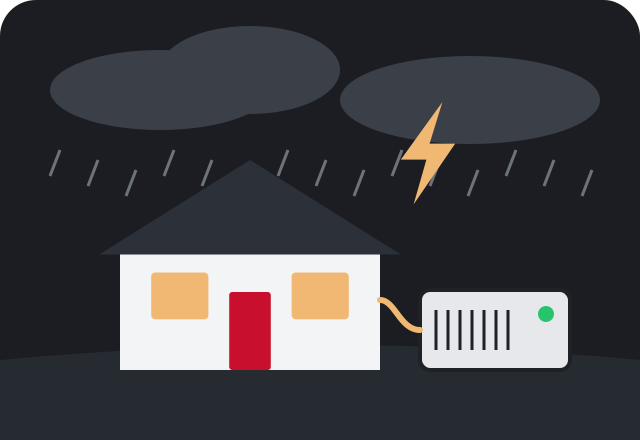
Central Alabama sees plenty of thunderstorms, and anyone who has lived in Birmingham through a few springs knows the sound of a strike close enough to rattle the windows. Most people think of lightning when they think of surges, and it is a real concern here.
But surges also come from inside the house and from the utility grid, in smaller and far more frequent bursts. Understanding where surges come from makes it easier to see how whole home surge protection fits into the picture.
What is a power surge?
A surge is a brief spike in voltage, well above the normal level your home receives. It may last only millionths of a second, but that is enough to stress or damage electronics, whose circuit boards are sensitive to voltage.
Surges come from three general sources:
- Lightning: a strike on or near power lines, the service drop or even the ground nearby can push a large surge into your wiring.
- Utility events: switching on the grid, a tree limb hitting a line, or power returning after an outage can cause spikes.
- Inside the home: motors in air conditioners, refrigerators, pumps and other large appliances create smaller surges each time they cycle.
The internal surges are small, but they happen many times a day. Over time they can shorten the life of electronics, control boards and LED drivers.
How does a whole home surge protector work?
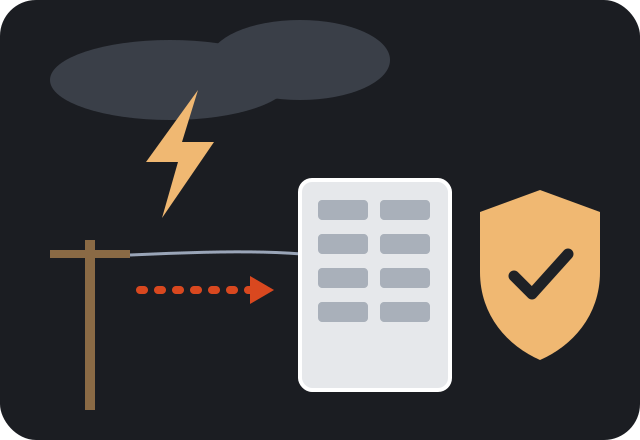
A whole home surge protective device, sometimes called an SPD, is mounted at or next to your main electrical panel, or in some setups at the meter. It connects to the panel's bus and to the grounding system.
Under normal voltage it does nothing. When voltage rises above a set threshold, components inside it switch from blocking current to conducting it, and they divert the excess energy to ground. It reacts in a tiny fraction of a second, then returns to standby.
Surge arrives
A spike enters through the service or starts at a large appliance.
Device clamps
The protector senses the high voltage and opens a path to ground.
Energy diverts
Much of the excess energy flows to ground instead of through branch circuits.
System returns to normal
The device resets itself and waits for the next event.
Surge protectors do wear out. Each large event uses up some of their capacity. Many units have indicator lights that show whether protection is still active; check them after big storms.
Whole home protection vs. plug-in surge protectors
These two are not substitutes for each other. They work as layers:
- A whole home device protects hardwired equipment that cannot use a plug-in strip, such as air conditioner and heat pump controls, water heaters, ranges, garage door openers and built-in lighting.
- It also reduces the size of large incoming surges before they reach the rest of the house.
- Plug-in surge protectors at computers, televisions and networking gear catch the remaining spike close to the device.
An ordinary power strip without surge rating is not a surge protector at all. Check the packaging for a surge rating before relying on one.
No device stops a direct strike. A lightning strike directly on the house or service carries more energy than any residential protector can handle. Surge protection reduces risk from nearby strikes and everyday spikes, and it is one part of a broader approach.
Why grounding matters
A surge protector needs somewhere to send the energy. That somewhere is your grounding system: the ground rods, grounding conductors and bonding that tie the electrical system to the earth. If grounding is missing, corroded or poorly connected, a surge protector cannot do its job well.
That is why an electrician installing surge protection will usually check the grounding and bonding first. In older homes this often turns up issues that need correcting. See electrical grounding for more on that side of the system.
Who benefits most, and what goes into installation?
Whole home surge protection is worth considering if your home has heat pumps or central air with electronic controls, a generator, solar, an EV charger, many smart devices, or a history of electronics failing after storms. It is often added during panel replacement or upgrades because the panel is already open.
Installation is generally straightforward for a licensed electrician: mounting the device, connecting it to a breaker or lugs, and keeping leads short and direct for good performance. Cost factors include the type of device, the panel's layout and available space, the condition of grounding, and whether it is bundled with other panel work. Some areas require a permit; check with your city or county. More detail is on the surge protection service page.
Lightning, storms and Birmingham-area homes
Central Alabama sits in what is often called Dixie Alley, with severe storms in spring and fall and frequent lightning through the summer. Homes on ridges and hillsides in places like Vestavia Hills and Trussville often have overhead service drops running through mature trees. Storm limbs and nearby strikes can both send spikes into the house. If electronics have failed after past storms, or you are adding expensive equipment, surge protection is a practical conversation to have with a local electrician. After a storm, the partial power outage guide can help if only part of the house loses power.
Key takeaways
- A whole home surge protector sits at the panel or meter and diverts voltage spikes to ground.
- Surges come from lightning, the utility grid and appliances inside the home.
- Use it together with plug-in surge protectors for sensitive electronics.
- Good grounding is essential for surge protection to work.
- No residential device can stop a direct lightning strike.
Frequently asked questions
It helps with surges from nearby lightning strikes that travel in on power lines, which are much more common than direct hits. No residential device can fully protect against a direct strike to the house or service, so think of it as risk reduction rather than complete protection.
Yes. A whole home device reduces large incoming surges, but some energy can still reach outlets, and small surges also start inside the home. Plug-in surge protectors at computers, televisions and networking gear provide a second layer close to the equipment.
Many panel-mounted units have indicator lights showing whether protection is active. Check them after major storms. If the light shows a fault or is out, have an electrician inspect and replace the device as needed.
In most cases, yes, as long as there is space for the device and its breaker and the grounding is in good shape. An electrician can check your panel and grounding and recommend a suitable device for your home.
Surge protectors reduce risk but cannot absorb unlimited energy, and they wear out after large events. Surges can also enter through cable, phone or antenna lines. An electrician can check the device, grounding and bonding to see what may have been missed.
Recent editions of the National Electrical Code require surge protection for new and replaced residential services, but whether that applies depends on which edition your city or county has adopted. Check with your local building department or ask the electrician doing the work.
Heat pumps and central air systems have electronic controls and circuit boards that can be damaged by surges, and they cannot plug into a surge strip. A whole home device at the panel is one of the few practical ways to add protection for them.