
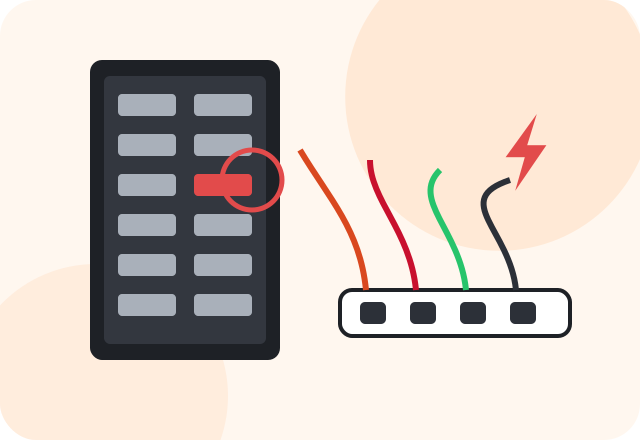
If you are fighting nuisance trips, a breaker that feels hot or one that won't reset, a call connects you with a local electrician for circuit breaker repair in Birmingham who can trace the cause instead of just swapping parts.
Diagnosing the Breaker Versus the Circuit
Breakers trip for three basic reasons: too much current for too long (overload), a sudden surge of current (short circuit or ground fault), or, for AFCI and GFCI breakers, a detected arc or leakage. The electrician tests the circuit with the load disconnected, measures current draw, and checks the terminal where the wire lands on the breaker.
Only a small share of calls end with the breaker itself being bad. When it is, that becomes breaker replacement. When the fault is out in a wall or device, the fix moves to the wiring or outlet.
When a Breaker Problem Needs a Professional
- The same breaker trips repeatedly with ordinary use
- A breaker trips immediately when you reset it
- An AFCI or GFCI breaker trips with nothing obvious plugged in
- The breaker handle feels mushy or won't latch
- Tripping started after storm work, remodeling or a new appliance
Common Breaker Symptoms
- One breaker runs noticeably warmer than its neighbors
- Trips that happen only when a specific appliance cycles on
- Faint burning smell near the panel after a trip
- Lights on the circuit flicker before it trips
- Breaker reset works, but power on the circuit is intermittent
How the Troubleshooting Usually Goes
The electrician starts with questions: what was running, how often it trips, and whether anything changed recently. Then comes testing at the panel and at outlets on the circuit, including insulation resistance where a hidden fault is suspected. Loose terminations are tightened to spec, damaged devices are replaced, and overloaded circuits may be split. The breaker tripping guide covers the common causes in plain terms.
- Current draw on the circuit under normal use
- Terminal tightness and wire condition at the breaker
- Shorts or ground faults with loads unplugged
- Which outlets and fixtures share the circuit
- Whether the breaker type is correct for that panel
Safety first. Resetting a tripped breaker once is fine. If it trips again right away, leave it off and don't hold it in the on position or tape it. If you smell burning, see smoke or hear crackling that continues, leave the house and call 911.
How it usually works
Call with the details
Note which breaker trips, how often and what was running. You'll be connected with a local electrician.
Testing
The electrician tests the breaker, the circuit and the connected devices to isolate the fault.
Fix the cause
Connections are corrected, faulty devices replaced, or the circuit is split or rerouted.
Confirm under load
The circuit is run under normal load to make sure the tripping has stopped.
For Birmingham-area homes
On hot Birmingham afternoons, many trip calls trace back to air-conditioning and heat pump circuits working harder than their wiring was sized for, or to connections that have loosened through years of heating and cooling. After lightning storms, an AFCI or GFCI breaker that suddenly starts tripping is another frequent reason for a visit.
Related electrical problems
Noticing one of these? Each guide explains likely causes and what's safe to check before you call about circuit breaker repair.