
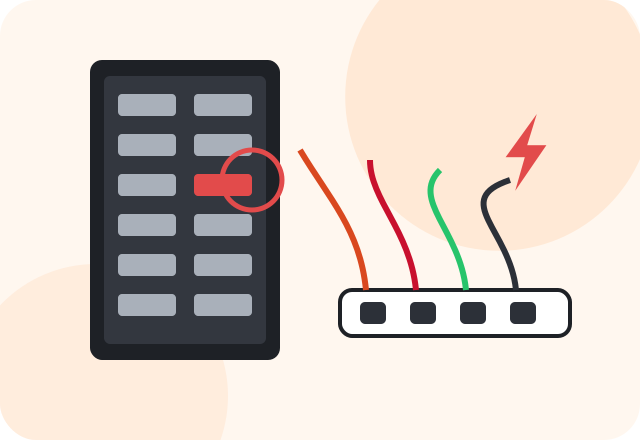
What homeowners usually notice
- The breaker snaps off a few seconds or minutes after you plug something into one particular outlet.
- The trip happens only when a heat-producing device runs, such as a space heater, iron or hair dryer.
- You hear a pop or see a small flash at the outlet at the moment the breaker trips.
- The breaker will not stay on even after you unplug everything on that circuit.
What to do right now
- Unplug everything from the outlet and from other outlets that went dead at the same time.
- Find the tripped breaker (the handle sits in the middle or off position), push it fully off, then back on. Do this once.
- If it trips again right away with nothing plugged in, leave it off and do not keep resetting it.
- Plug devices back in one at a time and note which one, if any, causes the trip.
Likely causes
Circuit overload
Too many high-draw devices share one 15 or 20 amp circuit. Space heaters and hair dryers are the usual culprits.
Damaged cord or appliance
A frayed cord, cracked plug or appliance with an internal fault can create a short the moment it is energized.
Worn or loose outlet
Old receptacles lose their grip and their terminal screws can loosen over years of use. Loose connections heat up, arc and can trip the breaker.
Short or ground fault in the wiring
Damaged insulation, a nail through a cable, or a hot wire touching a box can trip the breaker even with nothing plugged in.
Weak or failing breaker
Breakers wear out. A breaker that trips well below its rating, or feels hot, may need replacement.
Safe checks you can make
- Note exactly what was plugged in and running when the trip happened.
- Look at the outlet face for scorch marks, melted plastic or a cracked cover plate. Do not remove the plate.
- Check cords and plugs for fraying, flattened spots or heat damage.
Leave outlet covers, switch plates and the panel cover in place. Noting what you see and hear is enough; testing inside boxes belongs to an electrician.
Is this something you can fix yourself?
Some cases are within reach for a homeowner. If the breaker only trips when a space heater and a hair dryer run together, moving one of them to a different circuit usually solves it. If one appliance or extension cord trips the breaker wherever you plug it in, replace or repair that device and the outlet may be fine. What you should not do is swap the breaker for a larger one, remove the outlet to look inside, or keep resetting a breaker that trips with nothing connected. Those situations point to a wiring or breaker fault and call for professional troubleshooting.
When professional help is the right call
- The breaker trips with nothing plugged into the circuit.
- You see scorch marks, smell burning or hear crackling at the outlet.
- The breaker or panel cover feels warm to the touch.
- Several different circuits have started tripping in the same week.
- The outlet is loose in the wall or plugs fall out easily.
Safety first. Stop resetting the breaker and call for help if it trips instantly with nothing plugged in, if you see sparks or melted plastic, or if you smell something burning near the outlet or panel. If smoke keeps coming from the outlet or the wall, or you see flame, get everyone out and call 911.
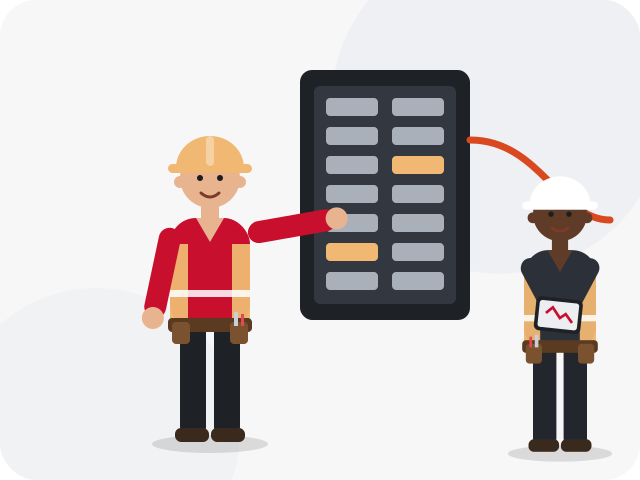
What an electrician typically checks
A local electrician typically starts by measuring the load on the circuit and testing the breaker. They open the outlet box safely with the power off, check the receptacle and its connections, and look for scorched insulation or loose terminals.
For trips with nothing plugged in, they trace the circuit to find the short, which may be in another outlet, a switch or a junction box further down the line. Repairs can range from replacing a worn receptacle through outlet repair to replacing a failing breaker.
Keeping it from coming back
Keep heat-producing appliances on separate circuits, retire power strips that are warm or cracked, and avoid running space heaters on extension cords. In older Birmingham homes where a single circuit may feed several rooms, it helps to know which outlets share a breaker so you can plan around it. The guide on why breakers keep tripping explains the difference between overloads, shorts and ground faults.