Homeowners usually need electrical panel service in Birmingham after noticing heat, a buzz or a burnt smell near the box, or when a home inspector flags the panel during a sale. Calling connects you with a local electrician who can look at it, explain what they find and tell you whether repair makes sense.
What Panel Service Covers
Panel service is hands-on work on the enclosure and its parts: tightening or replacing main and neutral lugs, cleaning light corrosion, replacing damaged breakers, fixing double-tapped breakers (two wires under a screw made for one), separating neutrals and grounds where they should not share a bar, installing missing knockout covers and making an accurate circuit directory.
It is also the hub for bigger decisions. If the bus bar is burned, the panel is a known problem design or it simply has no room left, the electrician will say so and talk through replacing the panel or upgrading to more capacity instead.
Reasons Homeowners Call About Their Panel
- A home inspection report lists panel defects before closing
- The circuit labels are missing, faded or plainly wrong
- You are adding a circuit and aren't sure the panel has space
- The panel is a Federal Pacific (Stab-Lok) or Zinsco unit
- Water, rust or insects have been seen around the box
Warning Signs at the Panel
- The panel cover or a breaker feels warm to the touch
- Buzzing, crackling or a hot plastic smell near the box
- Brown or black marks around a breaker or the cover openings
- Breakers that won't stay reset or feel loose in the panel
- Flickering throughout the house, not just on one circuit
What a Panel Visit Usually Involves
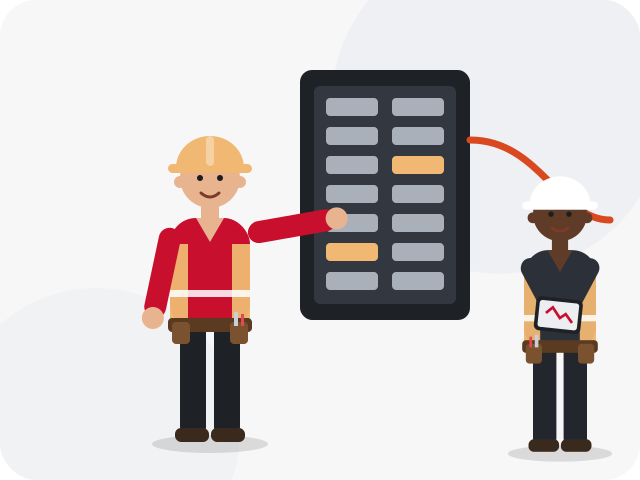
With the power managed safely, the electrician removes the dead front (the inner cover) and inspects terminations, the bus, the main breaker and the grounding and bonding connections. Many use a torque screwdriver on lugs and an infrared camera to find hot spots. Small repairs can often be done on the spot; anything larger gets explained with options before work starts.
- Tightness and condition of the main, neutral and ground lugs
- Signs of arcing, melting or heat on the bus bars
- Double taps, wrong breaker types and undersized wires
- Grounding electrode and bonding connections
- Rust, moisture entry and missing knockout seals
- Whether the circuit directory matches the real circuits

Safety first. Do not remove the panel cover or push on breakers that look damaged. Flipping a single tripped breaker back on once is fine. If the panel is hot, smoking or sparking and it keeps going, leave the house and call 911.
How it usually works
Call and describe the panel
Tell the person on the line what you've seen or smelled and roughly how old the house is. You'll be connected with a local electrician.
On-site inspection
The electrician opens the panel, checks connections and temperatures and notes any defects.
Repair or options
Minor issues are often fixed that visit. Larger problems come with a clear explanation of repair, replacement or upgrade.
Labeling and wrap-up
A good visit ends with an updated circuit directory and a short explanation of what was done.
For Birmingham-area homes
Birmingham's older neighborhoods, from Southside to Norwood, have panels that have been added to by several owners over the decades. It is common to find double taps, mismatched breakers and handwritten labels that describe rooms that no longer exist. Humid summers also speed up corrosion in panels mounted on exterior walls or in damp basements.
Related electrical problems
Noticing one of these? Each guide explains likely causes and what's safe to check before you call about electrical panel services.