
What homeowners usually notice
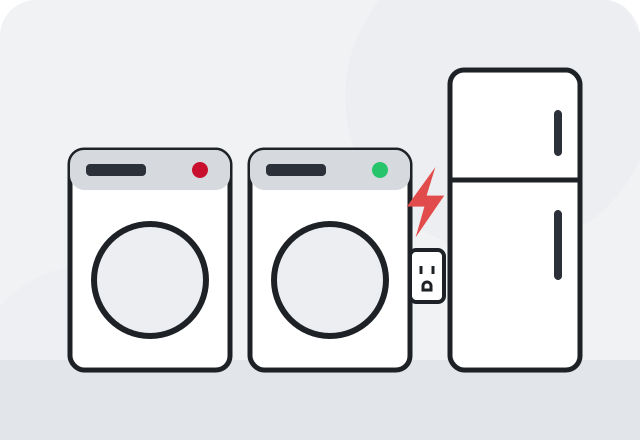
- The breaker snaps off a few seconds after the appliance starts, or right as its motor or heater kicks on.
- Other things on the same circuit work fine until that one appliance runs.
- The trips got more frequent over weeks rather than starting all at once.
- The appliance cord or plug feels warm, or the outlet has darkened.
What to do right now
- Unplug the appliance before you reset the breaker.
- Reset the breaker once by pushing it fully off, then back on.
- Leave the appliance unplugged if the breaker trips again with nothing connected.
- Stop using any cord that is cracked, melted or warm to the touch.
Likely causes
A fault inside the appliance
A worn heating element, shorted motor winding or water in the wrong place can pull far more current than normal. The breaker trips because it should.
Too much on one circuit
A space heater or window unit sharing a circuit with other loads can push it past its limit, especially in older homes with fewer circuits.
A weak or worn breaker
Breakers can lose calibration after years of trips and heat. A tired breaker may trip on loads it used to handle.
Loose or damaged wiring
A loose connection at the outlet or breaker creates heat and resistance, and that heat can cause nuisance trips or scorching.
AFCI or GFCI sensitivity
Newer arc-fault and ground-fault breakers react to some motors and to small leaks to ground. Sometimes that points to a real problem in an old appliance; sometimes it is a compatibility issue worth having checked.
Safe checks you can make
- Plug the appliance into an outlet on a different circuit and see whether it trips there.
- Note exactly when the trip happens: at startup, after it warms up, or at random.
- Check whether the breaker is a standard, GFCI or AFCI type (the label or a test button tells you).
- Write down what else was running on the circuit when it tripped.
Leave outlet covers, switch plates and the panel cover in place. Noting what you see and hear is enough; testing inside boxes belongs to an electrician.
Is this something you can fix yourself?
Some of these you can handle. If the appliance trips on every circuit you try, the fault is inside it, and an appliance repair technician (not an electrician) is the right call. If it only trips when a space heater or hair dryer is also running, moving one of them to another circuit may be the whole fix. What is not a homeowner job is replacing a breaker, opening the panel, or swapping in a larger breaker so it stops tripping. A bigger breaker on the same wire removes the protection and creates a fire risk.
When professional help is the right call
- The breaker trips with the appliance unplugged.
- The appliance works on other circuits but trips this one every time.
- The breaker or panel feels warm or you smell something hot near it.
- The breaker will not reset or feels loose in the panel.
- Several different appliances now trip the same circuit.
Safety first. If the breaker will not stay reset, or you notice heat, buzzing or a burning smell at the panel or outlet, stop resetting it and call an electrician. If there is smoke or flame that continues, leave the house and call 911.

What an electrician typically checks
An electrician will measure the load on the circuit, test the breaker, and check connections at the outlet and panel for heat damage. They will also confirm the wire size matches the breaker, which matters in older homes where past work may not have followed the rules.
Common fixes include replacing a worn breaker, repairing a loose connection, or adding a dedicated circuit for a heavy appliance. The circuit breaker repair page explains the breaker side, and why breakers keep tripping covers the broader picture.
Keeping it from coming back
Give heavy appliances their own outlets, avoid running them on extension cords or power strips, and pay attention when a breaker starts tripping more often. Early trips are warnings, and they are cheaper to act on than a scorched outlet.