
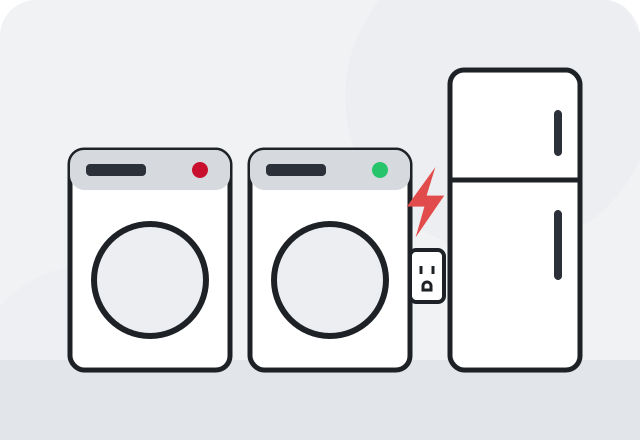
What homeowners usually notice
- The laundry GFCI trips partway through a cycle, often during spin or drain.
- The breaker trips when the washer fills or when the spin cycle speeds up.
- There is water on the floor under the washer or a damp outlet behind it.
- The washer makes a grinding or burning smell before shutting off.
What to do right now
- Turn the washer off and unplug it if the plug is dry and easy to reach.
- Look for water on the floor or around the outlet; if the outlet is wet, leave it and turn off its breaker.
- Once everything is dry, reset the GFCI or breaker once.
- Do not stand in water while touching any switch, plug or panel.
Likely causes
Water leak inside the washer
A leaking pump, tub seal or internal hose can drip onto the motor or wiring, which trips the GFCI. That is an appliance repair.
Water at the outlet
A split supply hose or overflowing drain standpipe can wet the outlet behind the washer. The GFCI trips to keep you safe.
Failing motor or drain pump
A motor with worn windings or a jammed pump can draw heavy current or leak current to ground, especially under the load of a spin cycle.
Shared or overloaded laundry circuit
The washer circuit is often expected to serve only the laundry area. If an iron, freezer or space heater shares it, the load adds up.
Worn GFCI or outlet
Laundry GFCIs live in a damp, vibrating spot. An aging GFCI can start tripping with no real fault.
Safe checks you can make
- Check the hoses and floor for water, and look at the drain standpipe for overflow marks.
- Note which part of the cycle trips it: fill, wash, spin or drain.
- See whether other laundry-room items share the same outlet or circuit.
- If the washer can reach another GFCI-protected outlet safely, see if it trips there too.
Leave outlet covers, switch plates and the panel cover in place. Noting what you see and hear is enough; testing inside boxes belongs to an electrician.
Is this something you can fix yourself?
If you find a leaking fill hose or a clogged drain that overflowed, fixing the water problem and letting the area dry may be all it takes. Trips tied to the spin or drain cycle, grinding noises or a leak from inside the cabinet point to the washer itself, so call an appliance repair technician. Do not remove or bypass the laundry GFCI; laundry areas combine water and metal cabinets, and that protection matters. If the washer runs fine on another circuit, or the GFCI trips with the washer unplugged, the outlet or wiring needs a licensed electrician.
When professional help is the right call
- The GFCI or breaker trips with the washer unplugged.
- The outlet behind the washer has been wet more than once or shows rust or corrosion.
- You feel a tingle touching the washer or its faucets.
- The outlet is warm, loose or discolored.
- There is no GFCI protection in the laundry area at all.
Safety first. Any tingle or shock from the washer or nearby metal means turn off the breaker and do not touch the machine. If water is near the panel or an outlet that is sparking, stay out of the water, keep others away, and call 911 if you see smoke or flame.

What an electrician typically checks
An electrician will test the GFCI and the circuit, check the outlet for moisture damage, and confirm the laundry circuit is not shared in ways it should not be. Where the laundry area is in a garage or basement, as it is in many Birmingham-area homes, they will also look at how the outlet is protected from splashes.
Typical fixes include replacing a worn or corroded GFCI, relocating an outlet away from the drain, or adding the proper circuit for laundry. See GFCI outlet installation and why a GFCI keeps tripping for background.
Keeping it from coming back
Replace rubber fill hoses with braided ones, check them each year, keep the drain standpipe clear, and do not overload the washer, which strains the motor. Test the laundry GFCI monthly.