
What homeowners usually notice
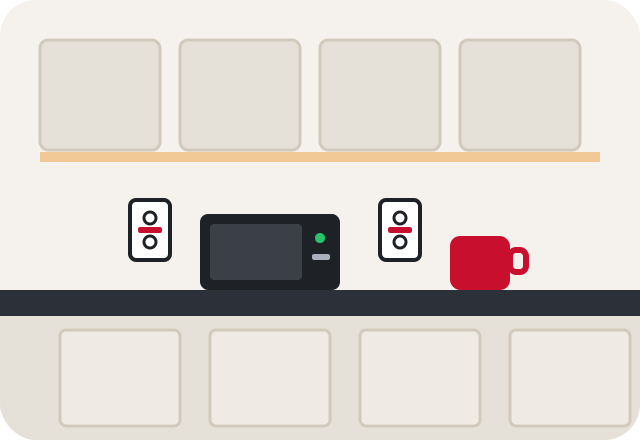
- Two or three countertop outlets go dead at once while others in the kitchen still work.
- The coffee maker or toaster stops mid-use and the outlet stays dead afterward.
- A GFCI outlet will not reset, or it resets and trips again right away.
- Outlets work some days and not others, or only when a plug is wiggled.
What to do right now
- Unplug everything on the dead outlets so nothing restarts under load.
- Look for a GFCI outlet in the kitchen, and also check nearby bathrooms, the garage or outdoors, then press Reset firmly once.
- Check the panel for a tripped breaker labeled kitchen or small appliance and reset it once.
- If the outlet is warm, discolored or smells burnt, leave it unplugged and do not use it again.
Likely causes
Tripped GFCI upstream
Kitchen countertop outlets are GFCI protected, and one GFCI can feed several outlets further down the line. People often reset the wrong one and assume the circuit is dead.
Overloaded small-appliance circuit
An air fryer, kettle and toaster oven running together can pull more than one circuit is meant to carry. The breaker trips, and the outlets on that circuit go quiet.
Worn-out GFCI outlet
GFCI outlets do wear out. An old one may refuse to reset, trip constantly or stop passing power even when it looks fine.
Loose or burned connection
Many older outlets were wired with push-in backstab connections that loosen with heat over time. When one lets go, every outlet after it can lose power.
Moisture near the sink
Water splashing into an outlet or collecting in a wall cavity can make a GFCI trip over and over, which is the device doing its job.
Safe checks you can make
- Map which outlets are dead and which still work; the pattern often points to where the break is.
- Note whether the problem started when a certain appliance was plugged in.
- Look (without touching inside) for scorch marks, cracks or melted plastic on outlet faces.
- Plug a lamp you know works into each dead outlet after resetting, so you are not fooled by a bad appliance.
Leave outlet covers, switch plates and the panel cover in place. Noting what you see and hear is enough; testing inside boxes belongs to an electrician.
Is this something you can fix yourself?
If a GFCI or breaker was simply tripped and the outlets come back and stay on, you have likely solved it. Spreading heavy countertop appliances across different outlets, and not running three heat-producing gadgets at once, often stops repeat trips. What you should not do is swap a GFCI yourself, open the outlet box to tighten wires, or keep resetting a device that trips as soon as you touch it. A GFCI that will not hold, or a run of outlets with no power and no tripped device anywhere, points to a wiring fault inside the wall.
When professional help is the right call
- No GFCI or breaker is tripped, yet the outlets have no power.
- The GFCI trips again immediately with nothing plugged in.
- An outlet cover is warm, discolored or has a burnt smell.
- You hear crackling or buzzing from an outlet.
- The kitchen circuit trips every time you use normal appliances.
Safety first. Stop using the kitchen outlets and call an electrician if any outlet is hot, scorched or smells like burning plastic. If you see smoke, sparks or flame that does not stop, get everyone out of the house and call 911.
What an electrician typically checks
An electrician will trace the circuit from the panel through each outlet to find where power stops, test the GFCI devices, and check each connection for heat damage. In many homes the fix is replacing a failed GFCI or moving loose backstab connections to proper screw terminals.
If the kitchen routinely overloads, the electrician may suggest adding a dedicated circuit or reworking how countertop outlets are split, which is common in older Birmingham kitchens that were wired long before today's appliance load. See GFCI outlet repair and outlet repair for what that work involves.
Keeping it from coming back
Test kitchen GFCIs monthly with the Test and Reset buttons, keep splashes away from countertop outlets, and give the microwave, refrigerator and other heavy appliances their own outlets instead of sharing through adapters. If an outlet ever feels warm, take it seriously.