
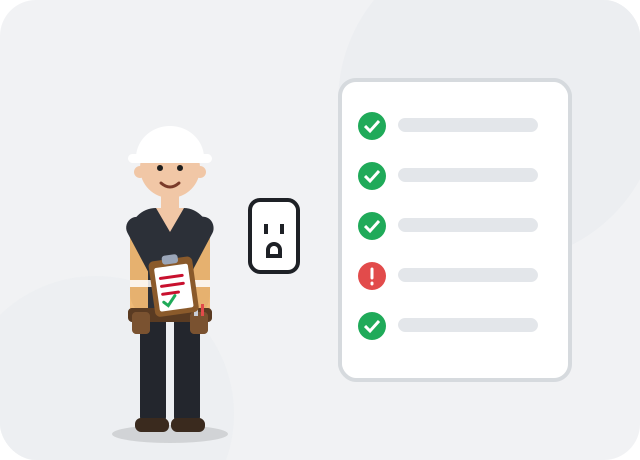
For an electrical inspection in Birmingham, AL, a call connects you with a local electrician who inspects homes. Unlike a general home inspection, which covers the whole house at a glance, this one focuses on the electrical system in detail, including the inside of the panel.
What an electrician's inspection covers
The electrician typically starts outside at the service drop, mast, meter base and grounding electrode, then moves to the panel. With the cover off, they compare breaker sizes to wire sizes, check the bus and connections, look for double-tapped breakers and signs of heat, and note whether the panel is a type with known problems, such as Federal Pacific (Stab-Lok) or Zinsco.
Inside the house, they sample outlets and switches in every room, test GFCI and AFCI protection, check that three-prong outlets are actually grounded, look at the wiring visible in the attic, basement or crawlspace, and test smoke and CO alarms. The result should be a written summary sorted by priority.
Good times to schedule an inspection
- Before closing on a house, especially one built before the 1970s
- After a lightning strike, flooding or storm damage to the service
- Before adding an EV charger, heat pump, hot tub or addition
- After moving into a home with unknown past electrical work
- When your insurer asks about the panel type or wiring age
What an inspection often turns up
- Ungrounded three-prong outlets installed on two-wire circuits
- Breakers larger than the wire they protect
- Open splices in attics or basements without junction boxes
- Missing GFCI protection in wet locations
- Brittle cloth insulation or remnants of knob-and-tube wiring
- Undersized or corroded grounding and bonding connections
What to expect during and after the visit
Plan to give the electrician access to the panel, attic, crawlspace or basement, garage and exterior. Inspecting a typical house takes a couple of hours, longer for large or heavily modified homes. Afterward, ask for the findings in writing, sorted into safety hazards to fix soon, code updates worth considering, and items to keep an eye on. That list is useful for planning repairs, and for negotiating when buying or selling.
- Service entrance, meter base and grounding electrode connections
- Panel condition, labeling, breaker sizing and signs of heat
- Outlet polarity, grounding, and GFCI and AFCI operation
- Visible wiring methods in attics, crawlspaces and basements
- Smoke and CO alarm placement and function
- Capacity for any new loads you're planning

Safety first. An inspection is a good reason to learn where your main breaker is and to make sure the panel is labeled and easy to reach. Until the visit, keep anything flammable away from the panel, don't overload power strips, and replace smoke alarm batteries if they're chirping. Leave covers and plates in place; opening the panel is part of the electrician's job, not a homeowner task.
How it usually works
Call to request an inspection
Mention why you want it: a purchase, a storm, a planned upgrade. The call connects you with a local electrician.
Schedule access
Pick a time when the attic, crawlspace, garage and panel can all be reached.
On-site inspection
The electrician works through the exterior, the panel and each room, testing as they go.
Written findings
You receive a prioritized list and decide what to fix now and what to plan for.
For Birmingham-area homes
Birmingham's housing stock makes inspections especially useful. Neighborhoods like Forest Park, Avondale and West End have many homes from the early 1900s, and Over the Mountain suburbs like Homewood and Mountain Brook have plenty of houses from the 1920s through the 1950s. These homes were often updated in pieces, so a kitchen may be wired to current code while an upstairs bedroom still runs on original two-wire cable. An inspection sorts out which parts of the house are which. See how often to have your wiring inspected for a general timeline.
Related electrical problems
Noticing one of these? Each guide explains likely causes and what's safe to check before you call about electrical inspection.