
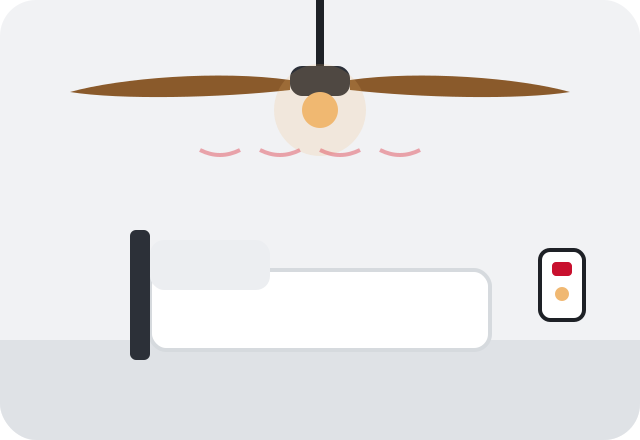
Birmingham homeowners run fans for months at a time, so wear is normal. A fan electrician can often find the fault quickly, and if the motor is worn out, will usually say so plainly.
Parts That Commonly Fail in Fans
Pull chain switches wear out from use and can stick on one speed or break. The capacitor controls fan speeds on many fans; when it weakens, the fan may run slowly or lose one or more speeds, as described on why a ceiling fan runs slow. Remote-controlled fans have a receiver in the canopy that can fail, especially after a power surge.
Loose splices inside the canopy can cause intermittent operation, flicker or a dead light kit. Wall controls can also fail, and a regular light dimmer used on a fan motor causes humming and heat.
When a Fan Needs Service
- The fan stays on one speed or will not turn off
- It runs slowly on every setting
- The light kit stopped working but the fan still runs
- The remote stopped responding even with new batteries
- The fan hums, clicks or smells hot when running
Symptoms and What They Often Mean
- Slow on every speed: often a weak capacitor
- Stuck on one speed: often a worn pull chain switch
- Works only sometimes: loose wiring or a failing receiver
- Humming: a wrong wall control or a motor issue
- Burnt smell: overheating that needs attention now
How Fan Repair Is Usually Handled
With the power off, the electrician checks the wall control, opens the canopy and switch housing, and tests the parts. Capacitors, pull chain switches and receivers are replaceable on many fans if matching parts are available. Loose connections are remade and the mount is checked.
If the motor bearings are worn, the windings are damaged or parts are no longer available, replacing the fan with a new installation is often the more practical path.
- Wall switch or control type and condition
- Splices and conductors inside the canopy
- Capacitor, pull chain switch and receiver
- Light kit sockets and wiring
- Mount, box and downrod security
Safety first. Turn a fan off and leave it off if it smells hot, smokes or makes grinding noises. Do not keep running a wobbling fan with a loose mount. Replacing a wall dimmer with the correct fan control is safer than living with a humming motor. Smoke or flame that continues means leave and call 911.
How it usually works
Call about the symptoms
Describe what the fan is doing and the call connects you with a local electrician.
Diagnose the fault
The electrician checks the control, wiring and fan parts with the power off.
Repair or recommend replacement
Failed parts are swapped if available, or replacement is discussed plainly.
Test all functions
Speeds, direction, light and remote are tested before the job is closed.
For Birmingham-area homes
Porch fans across the Birmingham area sit in humidity all summer, which corrodes switches and connections faster than indoor fans. Lightning is frequent here too, and fan remote receivers are sensitive to surges, so a dead remote after a storm is a common call. Whole-home surge protection can help reduce that risk.
Related electrical problems
Noticing one of these? Each guide explains likely causes and what's safe to check before you call about ceiling fan repair.