
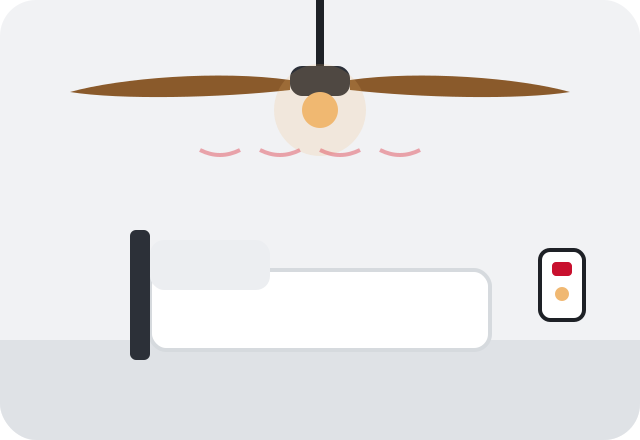
The main difference between hanging a light and hanging a fan is support. A fan is heavier and it moves, so it must hang from a box listed for fan support and anchored to the framing. A ceiling fan electrician checks that first.
Why Fans Need Different Boxes
A standard ceiling box is designed to hold a light. A fan-rated box is marked for fan support and is fastened to a joist or to a brace bar that spans between joists. Many brace bars can be installed through the existing hole, which avoids opening the ceiling.
Fans also need the right height. Blades are commonly recommended to be at least seven feet above the floor, so tall or sloped ceilings use a downrod, and low ceilings use a flush-mount fan. The ceiling fan installation guide covers choosing sizes.
Common Fan Installation Requests
- Replacing a light fixture with a fan in a bedroom or living room
- Adding a fan where there is no ceiling box
- Hanging a fan on a sloped or vaulted ceiling
- Putting a damp or wet rated fan on a covered porch
- Wiring separate wall controls for fan and light
Signs a Fan Was Not Mounted Right
- The fan wobbles even after balancing the blades
- The canopy moves or clicks when the fan starts
- The box is plastic or not marked for fan support
- The fan hangs too low for people to walk under safely
- Fan and light only work from pull chains
What Installation Usually Involves
The electrician checks the existing box and replaces it with a fan-rated box or brace if needed. If you want separate fan and light control from the wall, there must be enough conductors between the switch and the ceiling; if not, a new cable may be run or a remote receiver used. Switch installation covers the wall side. The fan is assembled, hung, wired, balanced and tested at each speed.
Bedroom circuits may need AFCI protection when the work involves new or extended wiring, depending on current code.
- Fan-rated box and secure attachment to framing
- Blade clearance from floor, walls and doors
- Downrod length for the ceiling height
- Wiring between the switch and the fan
- Fan rating for porches and damp areas

Safety first. Never hang a fan from a box that is not marked for fan support, and never use a standard light dimmer to control a fan motor, since it can make the motor hum and overheat. Turn off the breaker before anyone works on the fan. A falling fan can cause serious injury, so any movement in the mount should be checked promptly.
How it usually works
Call about the fan
Tell the operator where the fan is going and what is there now; the call connects you with a local electrician.
Check the ceiling
The electrician checks the box, framing, ceiling height and switch wiring.
Brace, hang and wire
A fan-rated box or brace goes in, then the fan is assembled, hung and wired.
Balance and test
The fan is balanced and every speed, direction and light function is checked.
For Birmingham-area homes
Homewood's 1920s to 1950s cottages and similar homes in Birmingham's older neighborhoods often have plaster ceilings and original light boxes that were never meant to carry a fan. Adding a brace in those ceilings takes care to avoid cracking plaster. Heat pumps and long summers make fans useful in nearly every bedroom here.
Related electrical problems
Noticing one of these? Each guide explains likely causes and what's safe to check before you call about ceiling fan installation.