
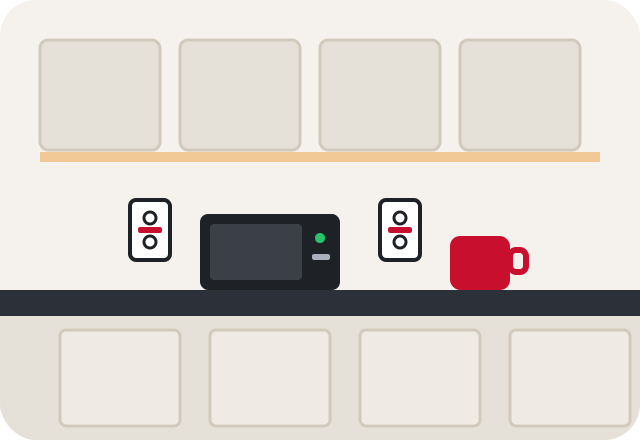
What homeowners usually notice
- The breaker trips the moment you press Start.
- It only trips when the coffee maker or toaster is also running.
- An over-the-range microwave trips as soon as the door is opened or closed.
- The microwave hums loudly, sparks inside or smells burnt before the trip.
What to do right now
- Unplug the microwave or switch off its breaker if it is hardwired or hard to reach.
- Reset the breaker once with the microwave off.
- Run the microwave alone with nothing else on that circuit to see if it still trips.
- Stop using it right away if you saw sparks inside or smelled burning.
Likely causes
Shared kitchen circuit
Microwaves draw more power than their cooking wattage suggests. Pair one with another heating appliance on the same circuit and the breaker trips.
Faulty door switch
Microwaves have several interlock switches in the door. When one fails, it can short the circuit and trip the breaker the moment the door moves.
Failing magnetron or high-voltage parts
The parts that make microwaves hold dangerous voltage even when unplugged. When they fail, the breaker may trip. Repair belongs to an appliance technician, or replacement.
Worn outlet or tired breaker
A loose outlet or a breaker weakened by years of heavy trips can give out under a microwave's load.
Safe checks you can make
- Check what else is plugged into outlets on the same breaker.
- Note whether the trip happens at Start, at door movement or partway through cooking.
- Plug a countertop microwave into another circuit and try it.
- Look at the outlet face and plug for darkening or melted plastic.
Leave outlet covers, switch plates and the panel cover in place. Noting what you see and hear is enough; testing inside boxes belongs to an electrician.
Is this something you can fix yourself?
This is one of the problems homeowners can often sort out. If the microwave only trips the breaker when the toaster or coffee maker is running, run them one at a time or move one to a different circuit. If it trips on its own no matter which outlet you use, the microwave is the problem, and an appliance technician or a replacement is the answer. Never open the microwave case; its capacitor can hold a dangerous charge long after unplugging. An electrician is the right call when the microwave works elsewhere but its home circuit trips, or when an over-the-range model needs its own circuit.
When professional help is the right call
- The breaker trips with only the microwave running and it works on other circuits.
- The outlet feeding the microwave is warm or discolored.
- An over-the-range microwave shares a circuit with countertop outlets and trips often.
- Lights on the same circuit flicker or dim sharply when the microwave runs.
Safety first. If you see sparks or fire inside the microwave, keep the door closed, cut power at the breaker if you can safely reach it, and call 911 if the fire does not go out. A burning smell from the outlet or wall means stop using it and call an electrician.
What an electrician typically checks
An electrician will check the load on the circuit, test the breaker, and inspect the outlet and connections. Over-the-range microwaves often are expected to have their own circuit; if yours was installed on a shared one, adding a dedicated circuit is a common fix.
In older homes around Birmingham, the microwave was often added to a kitchen that never planned for it. If that is the story at your house, kitchen electrical updates or a circuit check can sort out which outlets share which breakers.
Keeping it from coming back
Keep the microwave on its own circuit where you can, avoid running it at the same time as other heating appliances on that circuit, and do not run it empty, which strains the parts inside.