
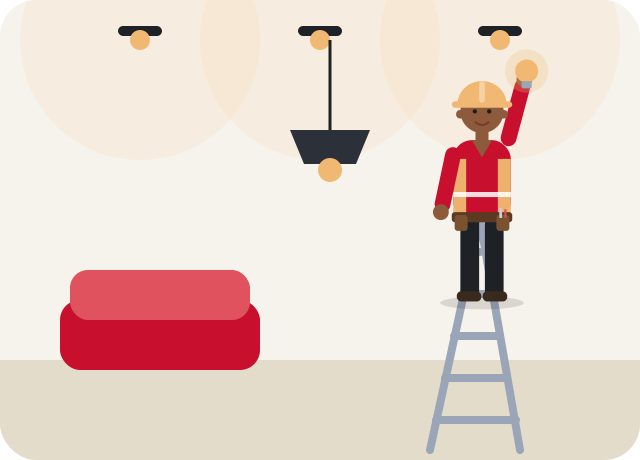
Good interior lighting usually mixes layers. A ceiling fixture handles general light, task lights handle counters and mirrors, and accent lights add depth. An interior lighting electrician can wire those layers so each one has its own control.
Rooms and Fixtures This Covers
Common requests include pendants over islands, vanity bars, under-cabinet strips, stairway lights, closet fixtures and flush mounts in bedrooms. Kitchens often mix pendants with recessed cans, while baths need fixtures rated for damp locations near tubs and showers.
Under-cabinet lighting can be low-voltage with a small driver or line-voltage. Either way the wiring should be concealed inside walls or cabinets rather than run along the backsplash in cords.
Good Times to Rethink Home Lighting
- During a kitchen or bath remodel while walls are open
- When the kitchen counters sit in shadow under the upper cabinets
- When a hallway or stairway has a switch at only one end
- When a vanity light is too narrow or too dim for the mirror
- When closets have a bare bulb with a pull chain
What Poor Interior Lighting Looks Like
- Shadows across work surfaces from a single center fixture
- Lamps and cords doing the job ceiling lights should
- Flicker or buzzing when interior lights are dimmed
- Glass shades that get too hot to touch
- A home lighting setup that has not changed since the house was built
What the Electrician Actually Does Indoors
Indoor work is mostly about routing. The electrician finds a power source, plans a path for cable through studs, joists and top plates, and sets boxes where the fixtures will hang. Pendants over an island need boxes centered to the island, not to the room, so measurements come first.
Closet lights must keep proper clearance from shelves and stored items, and enclosed fixtures or LED fixtures are generally preferred there. Bathroom lights near a tub or shower must carry the correct rating for that zone.
- Box locations measured to the island, mirror or stair
- Damp location ratings in bathrooms
- Clearances for closet fixtures
- Driver placement and ventilation for under-cabinet lights
- Dimmer type matched to the fixtures

Safety first. Never hang a pendant or vanity light from a box that moves when you push on it. Keep bulbs within the wattage marked on the fixture, and do not tuck under-cabinet drivers behind stored items where they can overheat. If a switch plate is warm or a fixture flickers along with a burning smell, turn the breaker off and have it looked at.
How it usually works
Call about your rooms
A short call connects you with a local electrician; mention which rooms and what bothers you about the light now.
Plan layers and controls
The electrician suggests fixture locations and which lights should share a switch or dimmer.
Run cable and set boxes
New wiring is routed through walls and ceilings with as little patching as practical.
Hang fixtures and adjust
Fixtures go up, dimmers are set, and you get a walkthrough of each control.
For Birmingham-area homes
Mid-century ranch homes in Center Point and parts of Vestavia Hills often have eight-foot ceilings and a single fixture per room, which makes low-profile flush mounts and task lighting more useful than big hanging fixtures. Older plaster walls in Avondale or Crestwood take longer to fish, so plan indoor lighting during a remodel when you can.
Related electrical problems
Noticing one of these? Each guide explains likely causes and what's safe to check before you call about indoor lighting.