
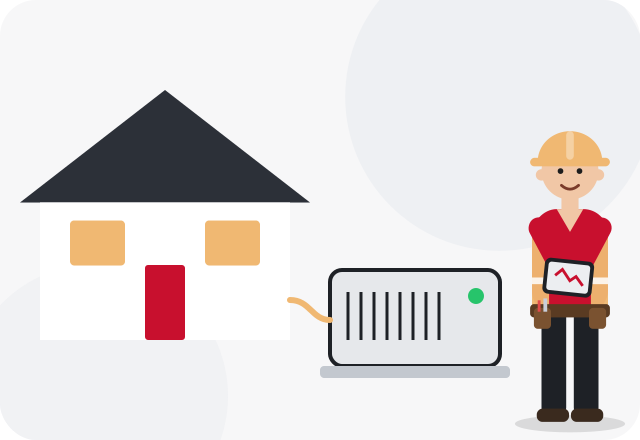
Getting it right is mostly about planning: how big the unit must be, where it can sit, how it gets fuel and how the transfer switch fits your service. A call connects Birmingham homeowners with a local electrician who installs whole-home standby systems.
Sizing a Generator for the Whole House
Sizing starts with a load calculation, not a guess from square footage. The electrician looks at your service size, the largest motor loads (air conditioners, heat pumps, well pumps), electric ranges, water heaters and dryers, and how many of those run at the same time. Starting current for air conditioning compressors often drives the final size more than steady running load.
Load management lets a smaller generator cover the whole house by temporarily shedding big loads, such as a second air conditioner or an electric dryer, when the generator nears capacity, then restoring them when there is room. That trade-off is worth discussing early.
Households That Often Choose Whole-Home Coverage
- Homes with medical equipment that must stay powered
- Families who want central air running through summer outages
- Homes with sump pumps, well pumps or all-electric heat
- Homeowners who travel and want protection while away
- People who have already outgrown a portable generator setup
Planning Questions to Answer First
- What size is your electrical service and panel?
- Is natural gas available at the street, or will you need propane?
- Where can the unit sit with required clearance from windows, doors and vents?
- Which large loads could be managed rather than run all at once?
- Does your HOA or city have placement or noise rules?
Transfer Switch, Fuel and Permits
Whole-house coverage usually uses a service-rated automatic transfer switch installed between the meter and the main panel, so the entire panel is transferred. That can require coordination with your electric utility. Fuel is either natural gas, which needs a line and meter large enough for the generator, or propane from a tank sized for the runtime you want. A licensed gas fitter typically handles the gas piping.
Expect an electrical permit, often a gas permit, and inspections before the system is placed in service. If you want to compare this with a portable connection, see generator installation; for problems with an existing unit, see standby generator repair.
- Load calculation and generator size
- Service-rated transfer switch location and utility coordination
- Gas meter capacity or propane tank sizing
- Pad placement, clearances and drainage
- Load management for large appliances

Safety first. Standby generators start automatically, so keep children and pets away from the unit and never open the enclosure. Keep the area around it clear of leaves, mulch and storage for airflow. Carbon monoxide alarms inside the home are still important, because exhaust can drift in through nearby openings.
How it usually works
Call to start planning
Share your panel size, fuel availability and what must stay on during an outage.
Load calculation and site visit
The electrician sizes the unit and picks the pad and switch locations.
Permits and installation
Pad, generator, transfer switch, wiring and fuel connections are installed and inspected.
Startup and handoff
The system is started, tested under load and explained, including the weekly exercise.
For Birmingham-area homes
Tornado watches, spring storms and occasional ice regularly take down lines across the Birmingham metro, and the region's tree-covered hills can slow restoration. After events like the 2011 outbreak and the 2021 Fultondale tornado, many families began weighing whole-home coverage. Sloped lots common in Vestavia Hills and Hoover also make pad placement and drainage an early design question.
Related electrical problems
Noticing one of these? Each guide explains likely causes and what's safe to check before you call about whole home generator.