Quick answer: A panel upgrade replaces an outdated or undersized breaker panel, and an electrical service upgrade raises the amperage coming into the home, which usually means a new meter base and service conductors too. The work requires a permit, an inspection and coordination with your electric utility to disconnect and reconnect power. Plan for the power to be off for part of a day and for cost to depend on scope, not on a single fixed figure.
Many Birmingham homes were wired when a household ran a refrigerator, a few lamps and maybe a window unit. Today the same house might carry central air, a heat pump, a kitchen full of appliances, a home office and possibly an electric vehicle. When the panel cannot keep up, you feel it in tripping breakers, dimming lights and projects that stall because there is no room for a new circuit.
A panel upgrade is one of the larger electrical projects a homeowner takes on. Knowing the steps ahead of time takes a lot of the uncertainty out of it.
Panel upgrade vs. service upgrade
These terms get used interchangeably, but they are not the same job.
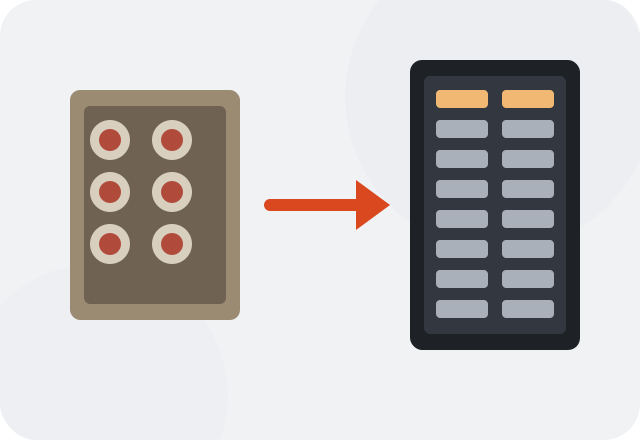
- Panel replacement: a new panel at the same amperage, often to replace a worn, damaged or problem-prone unit.
- Panel upgrade: a new, larger panel, sometimes with more circuit spaces, sized to the existing or a new service.
- Service upgrade: raising the service amperage from the utility, which can involve a new meter base, service entrance cable, mast or underground conductors, grounding, and a new main panel.
If your only problem is an unsafe or failing panel, electrical panel replacement may be the answer. If you are adding big loads, a service upgrade is usually part of the conversation.
Signs a home may need one
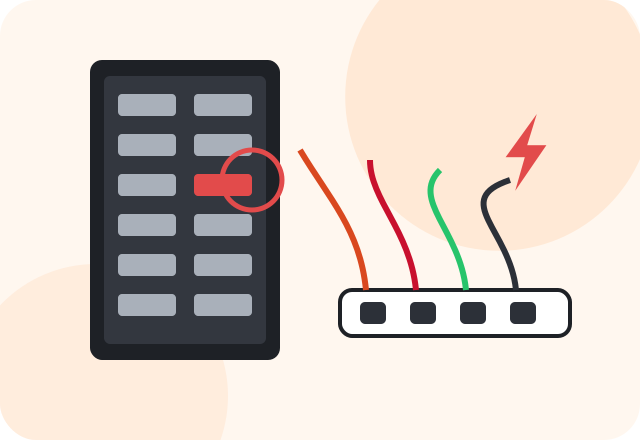
- Breakers trip regularly under normal use.
- Lights dim when the air conditioner, dryer or microwave starts.
- No open spaces, or many tandem breakers squeezed into the panel.
- A fuse box, or a panel brand with a known history such as Federal Pacific (Stab-Lok) or Zinsco.
- Rust, scorch marks, a warm cover or a burning smell near the panel.
- Plans for an EV charger, heat pump, addition, hot tub or major kitchen remodel.
For a deeper look at warning signs, see when to replace an electrical panel. Symptoms like power going out when an appliance turns on are worth mentioning to the electrician too.
The upgrade, step by step
Evaluation and load calculation
A licensed electrician examines the existing equipment, grounding and current loads, and calculates what service size fits your home and plans.
Permit
The contractor pulls an electrical permit with your city or county. Service upgrades almost always need one.
Utility coordination
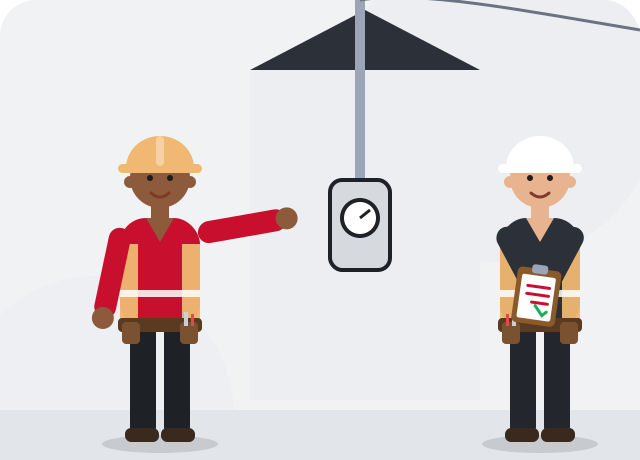
The electrician schedules with your electric utility, which disconnects power at the meter or service drop and reconnects after approval.
Installation
Old equipment comes out; the new panel, and for a service upgrade the meter base and service conductors, go in. Grounding and bonding are brought up to current requirements.
Circuit transfer and labeling
Each existing circuit is moved to the new panel, checked and labeled. Required protection such as AFCI and GFCI breakers is added where code calls for it.
Inspection and reconnection
The inspector checks the work, and once approved the utility restores permanent power.
Expect an outage. Power is typically off for much of the working day. Plan for refrigerator contents, medical equipment and anyone working from home.
What affects the cost?
There is no single number for a panel upgrade, because the scope varies widely from house to house. The main factors:
- Whether it is a panel swap only or a full service upgrade with a new meter base and conductors.
- Overhead versus underground service, and the condition of the mast or weatherhead.
- Panel location, and whether it must move to meet clearance rules.
- Grounding and bonding corrections.
- Wall repair around a flush-mounted panel.
- Number of circuits and any AFCI or GFCI protection required.
- Permit and inspection requirements where you live.
Ask for a written estimate that lists what is and is not included, especially drywall repair and any utility-side work.

Why older Birmingham homes often need more work
Homes in neighborhoods like Avondale, Forest Park, Ensley or West End, and cottages in Homewood, often have service equipment that has been added to piece by piece over decades. It is common to find undersized service, missing grounding, or old splices tucked in the panel. On hillside lots, the service drop may also run through tree limbs, and storm damage to the mast or meter base can turn a planned upgrade into a necessary repair.
None of that is unusual, and none of it is a reason to put off the project. It just means the evaluation step matters.
Safety reminders
Never remove the panel cover or try to replace breakers yourself. The service conductors entering the panel remain energized even with the main breaker off, and only the utility can cut them. If a panel is hot to the touch, buzzing loudly, sparking or smoking, keep clear, and call 911 if there is smoke or flame.
Key takeaways
- A panel upgrade replaces the breaker panel; a service upgrade also raises the amperage coming from the utility.
- Permits, inspection and utility coordination are standard parts of the job.
- Expect several hours without power on upgrade day.
- Cost depends on scope factors like service type, panel location, grounding and wall repair.
Frequently asked questions
The hands-on work often fits in a single day, with power off for much of it. Scheduling the permit, the utility disconnect and the inspection can add days or weeks beforehand. Service upgrades with a new meter base or underground work can take longer.
It depends on the home's size and loads. A smaller house with gas heat and cooking may be fine, while a home with central air, a heat pump, electric appliances and an EV may need more. A load calculation is the right way to answer it.
The electrician usually coordinates with your utility for the disconnect and reconnect, since the utility controls the service drop and meter. Homeowners may need to authorize the work or be available for scheduling.
Yes. Breakers are matched to the panel they are listed for, so a new panel gets new breakers. Current code may also require AFCI or GFCI protection on certain circuits when they are moved, which can add to the parts list.
Often it can, but a panel located in a bathroom, a clothes closet, or without proper working clearance may need to move. Relocation adds wiring and wall work, and the electrician will explain what current rules require.
It can if the flicker comes from an overloaded service or loose connections in the old panel. Flicker can also come from bulbs, fixtures, dimmers or utility issues, so it should be diagnosed before assuming the panel is the cause.