Quick answer: Most electric vehicle owners start with Level 1 charging from a standard 120-volt outlet, which is slow but may cover short daily drives. Level 2 charging uses a dedicated 240-volt circuit and refills a battery much faster, but it adds a large continuous load. Before a Level 2 charger goes in, a licensed electrician should run a load calculation on your panel, size the circuit correctly and pull any required permit.
Buying an electric vehicle turns the garage into a fueling station. For many Birmingham-area households, charging overnight at home is the whole appeal: you leave each morning with the battery topped off and rarely think about public chargers.
Getting there takes a little planning. The questions are simple, how fast do you need to charge and can your electrical service support it, but the answers depend on your panel, your driving and your house.
Level 1 vs. Level 2: which do you need?
Level 1 uses the cord that often comes with the vehicle and plugs into a regular 120-volt outlet. It adds only a few miles of range per hour of charging. If you drive a short commute and the car sits all night, that can be enough.
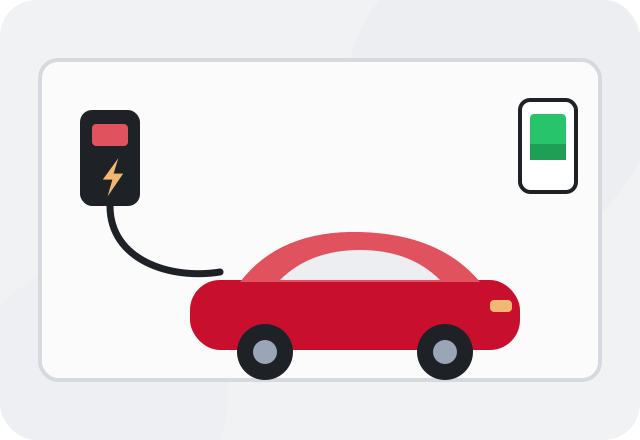
Level 2 runs on 240 volts, the same kind of circuit used by a dryer or range. It charges several times faster and is the usual choice for longer commutes, two EVs, or anyone who wants a full battery every morning.
- Level 1: no new circuit if a suitable outlet exists, slow, uses a standard receptacle.
- Level 2: needs a dedicated 240-volt circuit, much faster, either hardwired or plugged into a 240-volt receptacle.
Even for Level 1, the outlet should be on a circuit that is not shared with a freezer, shop tools or other big loads, and it should be in good condition. Charging draws steady current for hours, which exposes worn outlets fast.
What a load calculation tells you
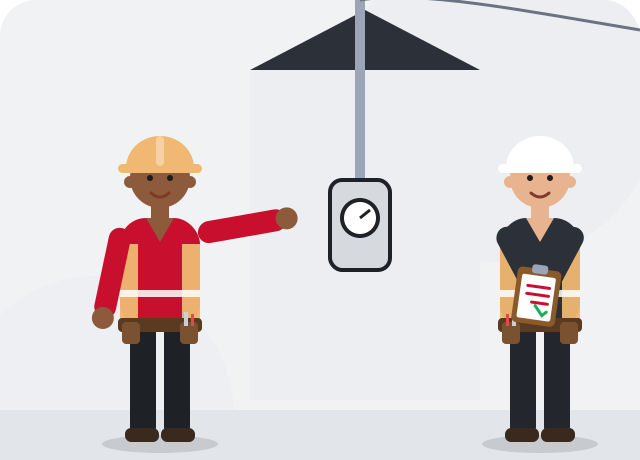
A load calculation adds up what your home can realistically draw at once, following methods in the National Electrical Code, and compares it with the capacity of your service and panel. EV chargers count as continuous loads, so the circuit must be sized with extra margin.
Birmingham homes run air conditioning hard for much of the year, and many use heat pumps with electric backup heat in winter. Those loads, plus an electric range, dryer and water heater, can leave less room than the panel label suggests.
- Enough capacity: the charger gets a new dedicated circuit and breaker.
- Tight capacity: a lower charging rate or a load management device may make it work.
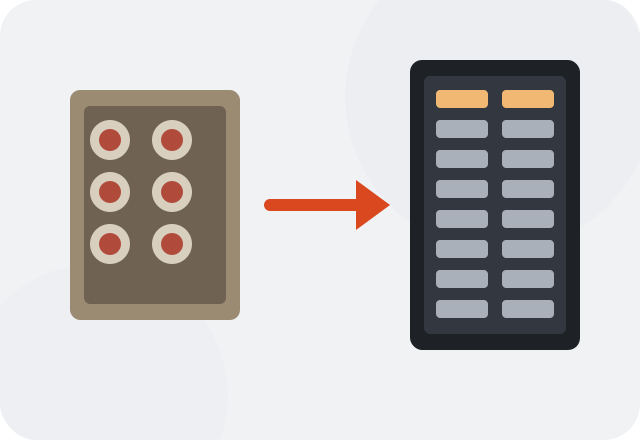
- Not enough capacity: an electrical panel upgrade or service upgrade may be needed first.
Space is not the same as capacity. A panel with open breaker slots can still be at its limit. The calculation, not the number of empty spaces, decides whether a charger fits.
Steps in a typical Level 2 installation
Plan the location
Decide where the vehicle parks and where the charge port sits, so the cable reaches without stretching across walkways.
Evaluate the panel
The electrician checks panel condition, available capacity and the route from the panel to the garage or driveway.
Permit
Many cities require an electrical permit for a new 240-volt circuit. Check with your city or county.
Run the circuit
A dedicated circuit is run with wire and breaker sized for the charger's continuous rating, with protection required by current code.
Mount, connect and test
The charger is mounted or the receptacle installed, then tested with the vehicle before inspection.
Cost factors include the distance from panel to parking spot, whether walls are finished, whether the panel needs work, detached garage or outdoor mounting, and the charger's rating. Getting a written scope helps you compare quotes fairly.
Garages, driveways and weather
Many homes in Hoover, Chelsea, Calera and other growing suburbs have attached garages near the panel, which keeps runs short. Older Birmingham homes may have a detached garage or only a carport, which means a longer run, possibly underground, and outdoor-rated equipment.
Outdoor chargers and receptacles need listings for wet locations and protection from physical damage. Summer thunderstorms and lightning are frequent here, so some homeowners pair a charger with whole-home surge protection to help protect the vehicle's onboard charging electronics and the rest of the house.
If the garage already has trouble, such as outlets that trip or go dead, fix that first; garage outlets not working can point to a circuit problem an EV would only make worse.

Safety notes for EV charging at home
Do not use ordinary extension cords or adapters to charge an EV. They are not built for hours of heavy current and can overheat. Watch for warmth, discoloration or a burning smell at the outlet or plug, and stop charging if you notice any of them. Keep the charging cable coiled off the floor where it will not be driven over. If you see smoke or flames, leave the garage, get everyone out and call 911.
Key takeaways
- Level 1 uses a standard outlet and suits short daily driving; Level 2 needs a dedicated 240-volt circuit.
- A load calculation, not open breaker slots, decides whether your panel can support a charger.
- Heavy air-conditioning and heat pump loads in Birmingham homes affect available capacity.
- Skip extension cords and adapters, and use outdoor-rated equipment for driveways and carports.
Frequently asked questions
Often you can, using Level 1 charging, as long as the outlet is in good condition and on a circuit without other heavy loads. It is slow, adding only a few miles of range per hour. An electrician can check the outlet and circuit before you rely on it nightly.
Not always. A load calculation shows whether your existing service can handle the new continuous load. Some homes have plenty of room, some can use a lower charging rate or load management, and some need a panel or service upgrade first.
Both work when installed correctly. A plug-in unit uses a 240-volt receptacle, which makes it easy to swap or take with you, but the receptacle must be heavy-duty and properly protected. Hardwired units avoid the receptacle and can sometimes charge at higher rates. The electrician can explain the tradeoffs for your setup.
Yes, with equipment listed for wet locations and a circuit run suited for outdoor use, which may involve trenching or conduit. Mounting height, cable management and protection from vehicles also matter. Local permit rules apply, so check with your city or county.
It adds a sizable load, but it usually runs overnight when other demand is lower. The load calculation accounts for air conditioning and other big appliances. Scheduled charging or load management can keep the charger from running at the same time as peak household use.
Yes. A Level 2 charger needs a dedicated circuit sized for its continuous rating, and even Level 1 charging works most reliably on a circuit without other significant loads. Sharing a circuit is a common cause of nuisance trips and overheated outlets.