
Quick answer: A partial power outage is usually caused by a tripped breaker or GFCI, but when large parts of the house lose power at once, the cause is often one of the two incoming service legs failing, either on the utility's side or at the meter, service drop or main panel connections. Check breakers and GFCIs first; if that does not restore power, contact your electric utility, and call a licensed electrician if the problem is on your side of the meter.
A full blackout is easy to understand. The whole street is dark and you wait for the utility. A partial power outage is more confusing: the kitchen works but the bedrooms do not, the lights are on but the dryer will not heat, or the air conditioner hums without cooling.
The good news is that partial outages follow a small number of patterns, and the first steps to sort them out are safe for any homeowner. This guide explains how power reaches the house, what it means when only part of it goes dark, and how to tell a simple tripped breaker from a problem that needs the utility or a licensed electrician.
How does power reach your house?
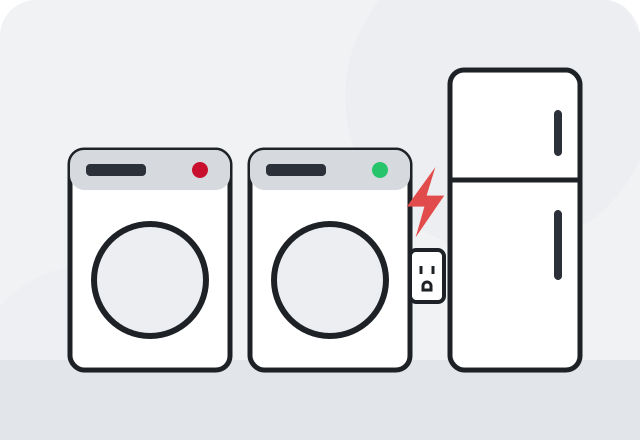
Most homes are fed by two hot conductors, often called legs, plus a neutral. Each leg carries about 120 volts. Ordinary lights and outlets use one leg. Large appliances like electric dryers, ranges, water heaters, and air conditioning or heat pump equipment use both legs together for 240 volts.
Inside the panel, breakers alternate between the two legs. That design explains most partial outages. If a single breaker trips, one circuit goes out. If an entire leg is lost, roughly half the circuits in the house go dark and the 240-volt appliances stop working properly, even though the other half of the house seems fine.
What should you check first?
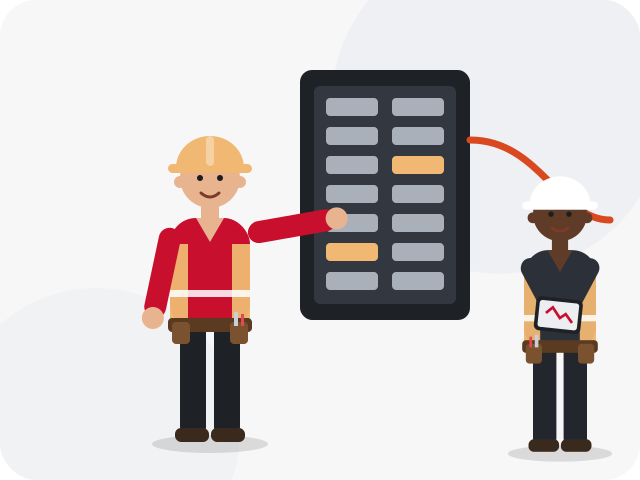
Look at the panel
Look for any breaker sitting in the middle or off position. Reset it once by pushing it fully off, then on. Do not remove the panel cover.
Check every GFCI
Press reset on GFCI outlets in bathrooms, the kitchen, garage, basement and outdoors. One tripped GFCI can kill outlets in several rooms.
Check neighbors and the utility
See whether neighbors have partial power too, and check your electric utility's outage reporting line or map.
Note what works and what does not
Write down which rooms, which lights and which big appliances are affected. That pattern tells an electrician a lot.
If resetting one breaker or GFCI restores everything, you have your answer. If a breaker trips again right away, leave it off; the guide on why a breaker keeps tripping explains what that usually means.
What if no breakers are tripped?
When a big chunk of the house is out and nothing in the panel looks tripped, a lost leg is the leading suspect. Clues that point that way:
- Roughly half the lights and outlets are dead, spread across different rooms.
- The electric dryer turns but does not heat, or the range works on some burners only.
- The air conditioner or heat pump will not start, or runs without cooling or heating.
- Some lights glow dimly instead of going fully dark.
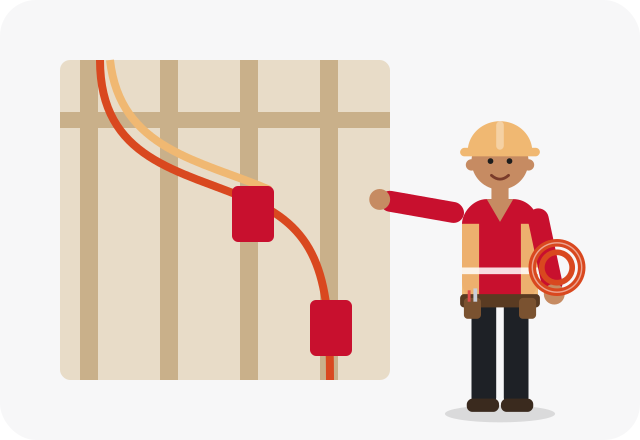
A lost leg can come from the utility's lines or transformer, a damaged service drop, a failing connection at the meter base, or a problem with the main breaker or its connections in the panel. There is a dedicated page on half the house having no power that walks through the symptoms in more detail.
Stay away from downed or sagging lines. If a service line is down, sagging, or pulled away from the house, keep everyone well clear, report it to your electric utility right away and do not try to move limbs off it.
Why are partial outages common after Birmingham storms?
Central Alabama sees severe storms in both spring and fall, frequent lightning and occasional winter ice. Birmingham and the surrounding communities are hilly and heavily wooded, so falling limbs on service drops are a familiar sight after a big storm. A limb does not have to bring the line down to cause trouble; it can strain a connection at the weatherhead or the meter so that one leg loses contact.
After a storm, look at your service drop and the mast on the side of the house from a safe distance. A bent mast, a line pulled tight at an odd angle or a meter base that looks tilted are all worth reporting. Generally, the utility handles the lines up to the connection point on your house, while the mast, weatherhead, meter base and everything inside are often the homeowner's responsibility. The split varies, so ask your utility which parts are theirs.

Could it be a loose neutral instead?
A related and more dangerous problem is a loose or broken neutral. Instead of half the house going dark, lights on one side may get unusually bright while others dim, electronics may reset or fail, and motors may hum strangely. This happens because voltage is no longer balanced between the two legs.
If you see lights brighten and dim together in different rooms, unplug sensitive electronics, turn off large appliances and contact both your utility and a licensed electrician promptly. The flickering lights guide on this site describes that pattern too, and emergency electrical help depends on which local providers are participating and available when you call.
What does an electrician do to fix it?
A licensed electrician will typically start at the panel, measuring voltage on each leg and at the main breaker. If a leg is missing at the panel's input, they check the meter base and service entrance connections and coordinate with the utility when the fault is on the utility's side. If both legs arrive but some circuits are dead, they trace the individual breakers and connections.
Repairs can range from tightening a service connection to replacing a damaged meter base, mast or main breaker. Older panels and aging connections sometimes lead to a broader conversation about panel replacement, especially in homes where the panel has not been updated in decades.
Key takeaways
- Most homes have two incoming legs; losing one can knock out about half the house and all 240-volt appliances.
- Check breakers and every GFCI first, and reset each one only once.
- No tripped breakers plus a dead dryer or AC points toward a lost leg on the service.
- Storm limbs on service drops are a common cause in Birmingham's hilly, wooded neighborhoods.
- Lights brightening and dimming together can signal a loose neutral and should be treated as urgent.
Frequently asked questions
This usually means one of the two incoming legs of power is missing. The cause can be the utility's lines, a damaged service drop, a failing meter base connection or a main breaker problem. Contact your electric utility first, then an electrician if the fault is on your side.
An electric dryer's motor runs on 120 volts, but its heating element needs both legs for 240 volts. When one leg is lost, the drum may turn while the heat stays off. The same pattern affects ranges, water heaters and air conditioning equipment.
It depends on where the fault is. The utility typically handles its lines and transformer and often the service drop up to your house. The mast, weatherhead, meter base and panel are often the homeowner's side. Ask your utility, and call an electrician for anything on your side.
A single tripped circuit usually is not. A lost leg or a loose neutral can be, because they can overheat connections and damage appliances or electronics. Avoid running large appliances, unplug sensitive devices and have the problem checked promptly.
Storms can damage one leg of your service, trip a single breaker or GFCI, or let water into an outdoor outlet that protects others downstream. Check breakers and GFCIs first. If a large, scattered part of the house is out, suspect storm damage to the service connection.
It is safer not to. Air conditioning and heat pump equipment uses both legs, and running it with one leg missing or voltage unbalanced can strain the compressor and motors. Turn it off at the thermostat until power is fully restored.
Yes. If one side of the main breaker fails or its connection loosens, the circuits on that leg lose power while the others keep working. An electrician can measure voltage at the main and tell whether the breaker or its connections need to be replaced.