Master Electrical Troubleshooting and Repairs Cypress Hills
A breaker that trips once is a warning. A breaker that trips every afternoon in July points to a wiring fault, an overloaded circuit, or an HVAC control problem that will not fix itself. Electrical troubleshooting and repairs Cypress Hills homeowners search for come down to one skill: finding the real cause before anyone swaps a part. In central Alabama, humidity, lightning, and aging panels turn small faults into fire risks faster than most people expect. The goal is not to make the symptom stop. It is to remove the cause.
This article covers how professional troubleshooting works, the faults we see most, what repairs cost in 2026, and how to pick a contractor you can trust.
Key Takeaways
- Repeat trips are data, not bad luck: A breaker that trips under the same load at the same time of day usually means an overload or a failing HVAC component. A trip with nothing running points to a short or ground fault.
- Your AC depends on a 24-volt control circuit: A blown 3-amp fuse on the furnace or air handler board, or a tripped condensate float switch, can shut down cooling even when every breaker is on.
- Heat at an outlet or panel means call today: Warm cover plates, burning smells, and buzzing breakers signal loose or arcing connections. Turn the circuit off and get a licensed electrician on site.
What Electrical Troubleshooting Actually Involves
Electrical troubleshooting is a structured process of isolating a fault. It is not guesswork with a screwdriver. A trained electrician measures voltage, continuity, and load current, then narrows the problem down one circuit at a time. The result is a repair aimed at the cause, not the symptom.
Troubleshooting and repair are two different steps. Troubleshooting finds the fault. Repair fixes it. A good electrical troubleshooting company will show you what it measured before quoting the fix.
| Step | What Happens | Tools Used | What You Should Get |
|---|---|---|---|
| 1. Interview | Ask when, where, and how often the problem shows up | Notes, panel directory | A clear symptom history |
| 2. Visual inspection | Check panel, devices, and visible wiring for heat or damage | Flashlight, thermal camera | Photos of any scorching or corrosion |
| 3. Measurement | Test voltage, continuity, and current draw | Multimeter, clamp meter, outlet tester | Actual readings, not opinions |
| 4. Isolation | Split the circuit to find the faulty section | Circuit tracer, insulation resistance tester | The exact device, splice, or run at fault |
| 5. Repair and verify | Fix the fault, then re-test under load | Same tools, plus load testing | Proof the circuit runs safely |
On recent service calls in Vestavia Hills and Hoover, we traced “random” trips to a single loose backstab connection three outlets away from the one that went dead. That is why measurement beats swapping parts.
Your next step: write down when the problem happens, what was running, and which rooms lost power before you call.
Voltage and Control Wiring: What Runs Your Home
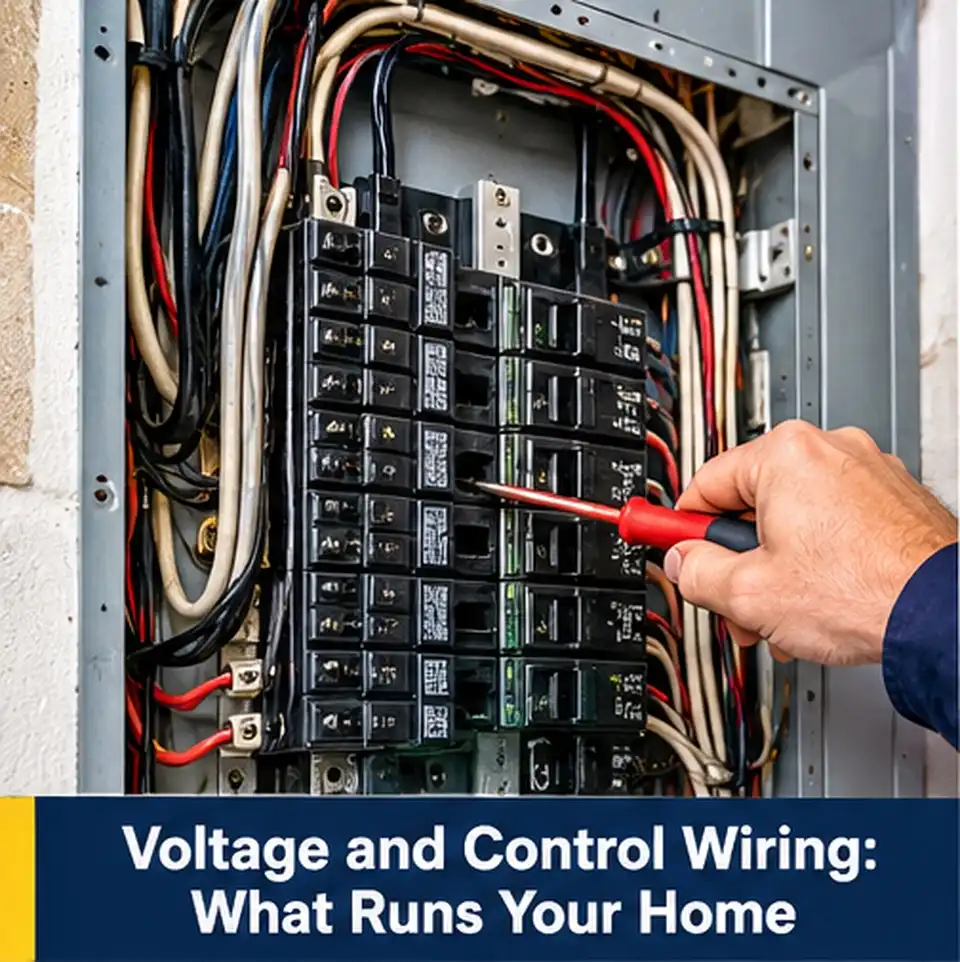
Your home runs on three voltage levels. Each one fails in a different way. Knowing which level you are dealing with tells you how dangerous the fault is and who should touch it.
| Voltage Level | Where You Find It | Typical Wire / Breaker | Common Fault | Who Should Repair |
|---|---|---|---|---|
| 240V | AC condenser, water heater, range, dryer, EV charger | 10 to 6 AWG, double-pole breaker | Burned lugs, failed contactor, loose neutral | Licensed electrician only |
| 120V | Outlets, lights, furnace blower, air handler | 14 or 12 AWG, single-pole breaker | Backstab failures, overloads, GFCI trips | Licensed electrician |
| 24V (Class 2 control) | Thermostat, furnace board, AC contactor coil | 18 AWG thermostat wire | Blown 3A board fuse, shorted wire, float switch open | Electrician or HVAC tech |
| Low voltage (5 to 12V) | Doorbells, landscape lighting, smart devices | 18 to 22 AWG | Failed transformer, poor splices | Homeowner (with care) or electrician |
How the Furnace Controls the AC
The air handler or furnace control board usually holds the transformer that powers your whole cooling system’s logic. It steps 120V down to 24V. When your thermostat calls for cooling, 24V travels down the Y wire to the outdoor contactor coil, which closes and sends 240V to the compressor.
If that 24V circuit fails, the outdoor unit never starts. Your breaker shows on. The thermostat screen may even look normal.
| HVAC Interlock Symptom | Likely Cause | Quick Check |
|---|---|---|
| Thermostat blank, no heat or cool | Blown 3A fuse on control board or tripped furnace breaker | Check furnace switch and breaker |
| Indoor fan runs, outdoor unit silent | Failed contactor, bad capacitor, or broken Y wire | Listen for contactor “click” at the condenser |
| AC shuts off on humid days | Condensate float switch tripped by a clogged drain line | Check the drain pan for standing water |
| Fuse blows again after replacement | Shorted thermostat wire (often chewed or pinched) | Stop replacing fuses and call |
| Condenser breaker trips on startup | Failing compressor or weak start capacitor | Do not reset more than once |
If you’ve spent a summer managing cooling loads in Alabama, this system control setup makes complete sense. Our government-certified Birmingham electricians frequently see this in older local homes: a clogged condensate line trips the float switch, cooling stops, and the homeowner assumes the breaker failed.
How to Dim LED Lights Without a Dimmer Switch Safely
Your next step: locate your furnace or air handler service switch and condensate drain line so you can check both before calling.
Common Residential Faults and Their Causes
Most home electrical problems fall into six groups. Each one has a short list of likely causes. Matching the symptom to the cause is the core of good electrical troubleshooting and repairs Cypress Hills homeowners and Birmingham families need.
| Symptom | Most Likely Causes | Risk Level |
|---|---|---|
| Breaker trips under load | Overloaded circuit, failing appliance motor | Moderate |
| Breaker trips with nothing on | Short circuit, ground fault, damaged wire | High |
| Outlet dead, breaker on | Tripped GFCI upstream, loose backstab, failed device | Moderate |
| Warm or scorched outlet | Loose terminal, overloaded receptacle, aluminum wiring | High |
| Flickering lights (one fixture) | Loose bulb, incompatible LED dimmer, bad socket | Low |
| Flickering lights (whole house) | Loose neutral at panel or meter, utility issue | High |
| Lights dim when AC starts | Large motor startup draw, undersized service, weak connection | Moderate |
| Half the house without power | Lost leg of 240V service, failed main breaker | High |
| Buzzing panel or breaker | Arcing connection, failing breaker | High |
| GFCI won’t reset | Ground fault downstream, moisture, worn device | Moderate |
Breakers That Keep Tripping
A breaker trip is a safety device doing its job. Thermal trips happen slowly from overload. Magnetic trips happen instantly from a short. AFCI breakers (arc-fault circuit interrupters) trip when they detect dangerous arcing patterns.
Outlets and GFCI Problems
A GFCI (ground-fault circuit interrupter) cuts power when current leaks to ground. One GFCI in a bathroom can protect outlets in two other bathrooms and the garage. Always check every GFCI in the house before assuming an outlet is dead.
Flickering and Dimming Lights
One flickering light is usually a fixture or bulb issue. Every light flickering at once is not. A loose neutral at the panel can send 160V or more to some circuits and damage electronics in seconds.
Your next step: if multiple rooms flicker or dim together, turn off sensitive electronics and call the same day.
Alabama-Specific Electrical Risks
Alabama homes face three local stressors: humidity, severe storms, and aging equipment. Each one shortens the life of connections and devices. Each one changes how we inspect a home.
| Risk Factor | What It Does | Real Alabama Example |
|---|---|---|
| High humidity | Corrodes panel lugs, breaker stabs, and outdoor boxes | Rust inside exterior panels and AC disconnects |
| Lightning | Sends surges through service and phone/cable lines | Fried HVAC control boards after spring storms |
| Tornadoes and high winds | Tear service drops, bend masts, damage meter bases | The April 2011 tornado outbreak left thousands of damaged services across the state |
| Aging panels | Older brands fail to trip reliably | Federal Pacific Stab-Lok and Zinsco panels in mid-century homes |
| Aluminum branch wiring | Loosens at terminals, overheats | Homes wired roughly 1965 to 1973 |
| Two-wire circuits | No ground path for modern devices | Pre-1960s homes in Homewood and Bessemer |
| Heavy summer cooling loads | Long run times stress breakers and contactors | AC breakers running hot in July and August |
Storm Damage: Utility Side vs. Your Side
Storm damage splits into two zones. The utility owns the lines and usually the meter. You own the meter base, service mast, and everything inside.
The May 2024 Houston derecho showed how fast this gets complicated. Reports of electrical towers down in Cypress TX came as straight-line winds toppled high-voltage transmission structures, leaving hundreds of thousands without power for days. Homes there needed utility repairs first, then private electricians to fix bent masts and ripped meter bases before power could return. Alabama homeowners face the same sequence after a tornado or derecho.
| Damage | Who Fixes It |
|---|---|
| Downed lines on the street | Utility (stay at least 35 feet away) |
| Service drop torn from the house | Utility reconnects after your side is repaired |
| Bent service mast or pulled meter base | Licensed electrician, often with a permit |
| Damaged panel or wiring inside | Licensed electrician |
At Bob’s Electrical Services in the Birmingham area, we recommend a quick inspection of the mast, weatherhead, and meter base after every major storm. Damage you cannot see from the ground still lets water into the panel.
Your next step: after your next storm, photograph your service mast and meter base from the yard and look for bends, gaps, or loose straps.
Step-by-Step Troubleshooting Process
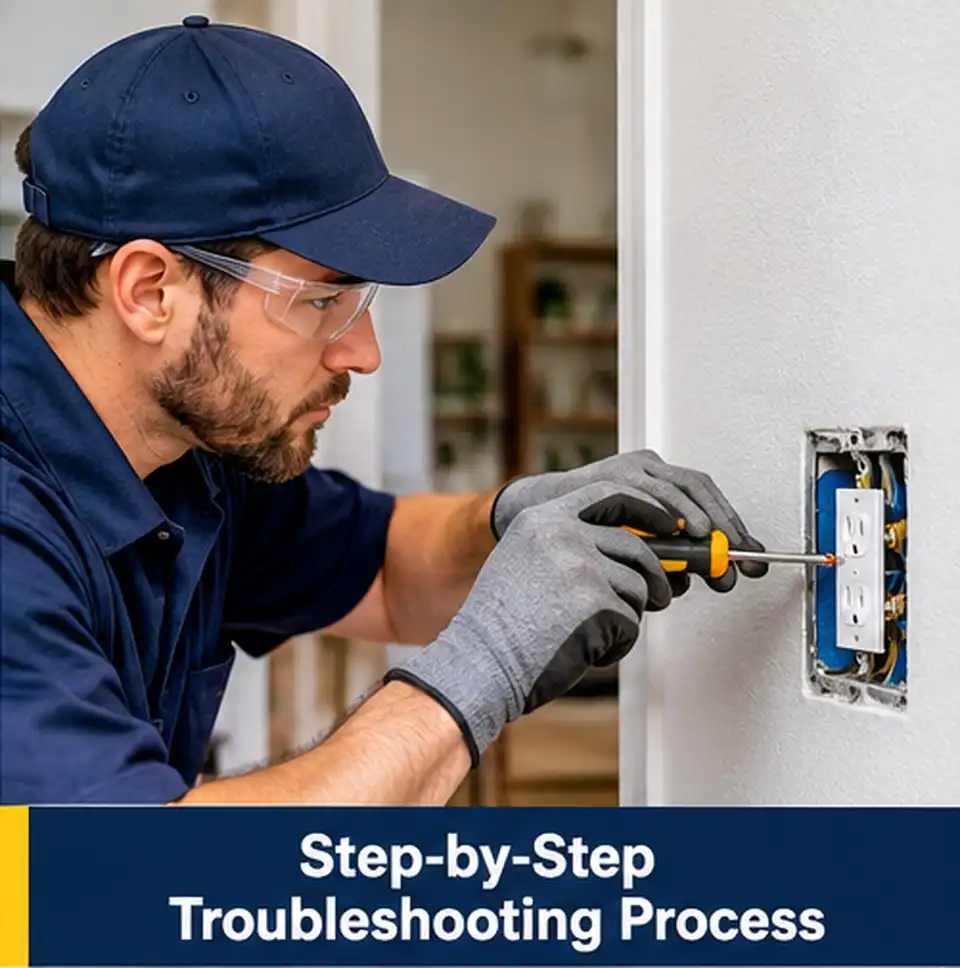
Professional troubleshooting follows a fixed order. Skipping steps leads to repeat visits. Here is how our crews work through a fault.
- Gather the history. Note when the problem started, how often it happens, and what was running.
- Check for hazards first. Look for heat, smoke, scorch marks, or water near electrical gear.
- Inspect the panel. Check breaker positions, labels, and signs of heat at the bus or lugs.
- Scan with a thermal camera. Hot spots reveal loose or overloaded connections behind covers.
- Measure supply voltage. Confirm both 120V legs and 240V at the main.
- Test the affected circuit. Measure voltage at devices, open-neutral conditions, and ground continuity.
- Measure load current. Clamp the circuit while appliances run to spot overloads.
- Isolate the fault. Disconnect sections of the circuit until the problem disappears.
- Test insulation. Use an insulation resistance tester on suspect runs to find damaged wire.
- Check HVAC controls when relevant. Test 24V at the board, thermostat, contactor, and float switch.
- Repair the cause. Replace the failed device, tighten or remake connections, or repair the run.
- Verify under load. Run the circuit at normal demand and re-check temperatures.
- Document the work. Record readings, photos, and parts replaced for your records.
A proper approach to electrical troubleshooting and repairs Cypress Hills homeowners expect should include steps 5 through 9 every time. You can see the full range of diagnostic and repair work in our residential electrical services list, from breaker repair to grounding corrections.
Electric Car Charger Installation Near Me: Know Your Load
Safe Checks You Can Do Yourself
- Reset tripped breakers once. Push fully to OFF, then back to ON.
- Press reset on every GFCI in bathrooms, kitchen, garage, laundry, and outdoors.
- Unplug devices on the dead circuit and try again.
- Check the furnace service switch (it often looks like a light switch near the unit).
- Look at the condensate pan under the air handler for standing water.
Your next step: if a breaker trips again after one reset, leave it off and call.
Repair vs. Upgrade: Making the Right Call
Not every fault needs new equipment. Some need a $10 device and good workmanship. Others signal that the panel or wiring has reached the end of its life.
| Factor | Repair Makes Sense | Upgrade Makes Sense |
|---|---|---|
| Panel age | Under 25 years, no heat damage | 30+ years or known problem brand |
| Panel brand | Current listed brand | Federal Pacific, Zinsco, some Challenger models |
| Service size | 200A with room for loads | 100A or less with EV, heat pump, or addition planned |
| Breaker condition | One failed breaker | Multiple hot, corroded, or loose breakers |
| Wiring type | Copper NM cable in good shape | Knob-and-tube, cloth-insulated, or ungrounded two-wire |
| Repair frequency | First issue in years | Repeat calls for the same circuits |
| Insurance | No concerns from insurer | Insurer flags panel or wiring |
| Safety devices | Easy to add GFCI/AFCI | Panel cannot accept modern AFCI/GFCI breakers |
Equipment Lifespan Reference
| Component | Typical Lifespan | Replace Sooner If |
|---|---|---|
| Breaker panel | 25 to 40 years | Rust, scorching, or problem brand |
| Circuit breakers | 30 to 40 years | Hot to the touch, won’t reset, buzzing |
| GFCI outlets | About 10 years | Fails monthly test button |
| Standard outlets | 15 to 25 years | Loose grip, cracked face, discoloration |
| Smoke alarms | 10 years | Past date on the back |
| Whole-home surge protector | 3 to 10 years | Indicator light out, after a major strike |
| AC contactor | 5 to 15 years | Pitted contacts, chattering |
| Copper NM wiring | 50+ years | Damaged insulation, heat exposure |
Our Birmingham service crews notice a clear pattern in older Mountain Brook and Homewood homes: a single repair fixes today’s symptom, but the original 100-amp panel cannot handle a heat pump plus an EV charger. In those homes, a load calculation is the honest starting point.
Your next step: find the manufacturer label inside your panel door and note the brand and amp rating.
Electrical Safety Checklist
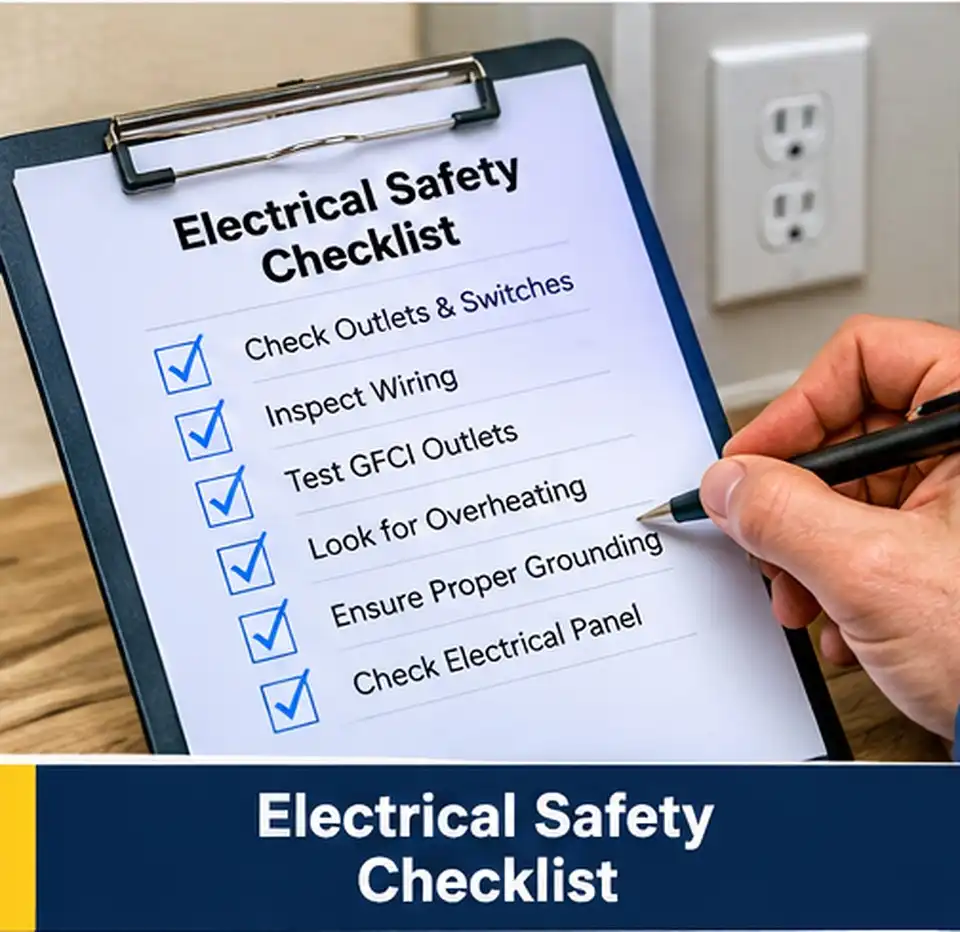
Electrical safety starts with knowing which signs mean stop. Use this checklist monthly and after every storm.
Stop and Call Immediately
- Burning or hot-plastic smell from an outlet, switch, or panel
- Sparks, arcing, or buzzing at the panel
- Outlet or switch plate hot to the touch
- Shocks from appliances, faucets, or fixtures
- Water near the panel, outlets, or wiring
- Half the house suddenly without power
Monthly Home Checks
- Test every GFCI with the test and reset buttons
- Test smoke and CO alarms
- Look for discolored outlets or cover plates
- Check extension cords for heat or damage
- Listen for buzzing at switches and the panel
- Clear the area in front of the panel (36 inches of working space)
Never Do These
- Never remove the panel cover (the main lugs stay energized even with the main off)
- Never replace a breaker with a larger one to stop tripping
- Never touch downed lines or anything they contact
- Never run a generator into an outlet without a transfer switch or interlock
The NFPA codes and standards library, including NFPA 70 (the National Electrical Code), sets the installation rules licensed electricians follow for breakers, GFCI and AFCI protection, and working clearances. Code is the minimum, not the goal.
Your next step: test every GFCI in your home this week and replace any that fail to trip.
Which Direction Should a Ceiling Fan Turn in the Summer?
2026 Cost Breakdown for Birmingham-Area Homes
Most troubleshooting visits cost $100 to $250 for the diagnostic. Simple repairs add $150 to $450. Panel work and rewiring cost far more. The ranges below are typical Birmingham-area estimates for 2026.
| Service | Estimated Cost Range (2026) | Notes |
|---|---|---|
| Diagnostic / troubleshooting visit | $100 to $250 | Often credited toward the repair |
| Outlet repair or replacement | $150 to $350 | Per device, includes labor |
| GFCI outlet replacement | $150 to $300 | Per device |
| Standard breaker replacement | $150 to $400 | Depends on panel brand |
| AFCI or dual-function breaker | $200 to $450 | Breaker cost is higher |
| HVAC 24V control fault repair | $150 to $450 | Fuse, wire, or float switch |
| AC disconnect replacement | $250 to $600 | Outdoor fused or non-fused |
| Whole-home surge protector | $350 to $900 | Installed at the panel |
| Dedicated circuit (new) | $300 to $900 | Distance and wall access matter |
| Panel replacement (same size) | $1,800 to $4,500 | Permit and inspection included |
| Service upgrade (100A to 200A) | $2,500 to $5,500 | Utility coordination required |
| Meter base or mast repair | $800 to $2,500 | Common after storms |
| Partial or whole-home rewiring | $8,000 to $25,000+ | Size, access, and wall type |
What Raises or Lowers Cost
- Raises cost: after-hours calls, hard-to-reach attics, plaster walls, problem-brand panels, permit requirements
- Lowers cost: clear symptom history, accessible panel, bundling several small jobs into one visit
Every quote should list the permit, inspection, patching, and cleanup. A low number that skips the permit is not a lower price.
Your next step: ask for a written, line-item quote that separates diagnostic fees from repair labor and parts.
Energy Efficiency and Electrical Health
Efficient homes are easier on wiring. Lower loads mean cooler breakers, fewer trips, and longer equipment life. The U.S. Department of Energy’s Energy Saver resources explain how thermostat settings, LED lighting, and properly sized equipment cut household energy use.
| Efficiency Upgrade | Electrical Benefit |
|---|---|
| Smart or programmable thermostat | Fewer short cycles on AC contactor and compressor |
| LED lighting | Lower circuit loads (requires LED-rated dimmers) |
| Variable-speed air handler | Softer startup, less light dimming |
| Heat pump replacement for strip heat | Lower winter amperage on aging panels |
| Whole-home surge protection | Protects control boards in efficient HVAC equipment |
Smart thermostats often need a C wire (common wire) for steady 24V power. Without one, some models pull power through other wires and cause the AC to chatter or shut off. We check for a C wire before recommending any smart thermostat.
Your next step: pull your thermostat off its base plate and check whether a wire is connected to the “C” terminal.
How to Install a Ceiling Fan Without Existing Wiring in AL
DIY vs. Professional Electrical Work
Some electrical tasks are safe for homeowners. Most troubleshooting is not. The line falls at anything that requires opening the panel, testing live circuits, or changing wiring.
DIY Troubleshooting
Pros:
- No cost for basic checks
- Fast response while you wait for help
- Solves tripped GFCIs and simple overloads
Cons:
- No test equipment to find hidden faults
- Shock and fire risk inside boxes and panels
- Permit violations can affect insurance and home sales
- Symptoms often return because the cause stays hidden
Professional Troubleshooting
Pros:
- Measured diagnosis with meters and thermal imaging
- Code-compliant repairs with permits when required
- Documentation for insurance and resale
- Warranty on labor and parts
Cons:
- Diagnostic fee even for simple fixes
- Scheduling around availability
| Situation | DIY OK? | Call a Pro? |
|---|---|---|
| Resetting a GFCI | Yes | No |
| Replacing a light bulb | Yes | No |
| Breaker trips once, then holds | Yes (monitor it) | If it repeats |
| Outlet dead after GFCI reset | No | Yes |
| Warm or scorched outlet | No | Yes |
| AC won’t start, breakers on | Check float switch only | Yes |
| Panel buzzing or hot | No | Yes, immediately |
| Adding a circuit | No | Yes |
Your next step: if your problem lands in the “call a pro” column, turn off the affected circuit and keep it off until the visit.
How to Choose an Electrical Troubleshooting Company
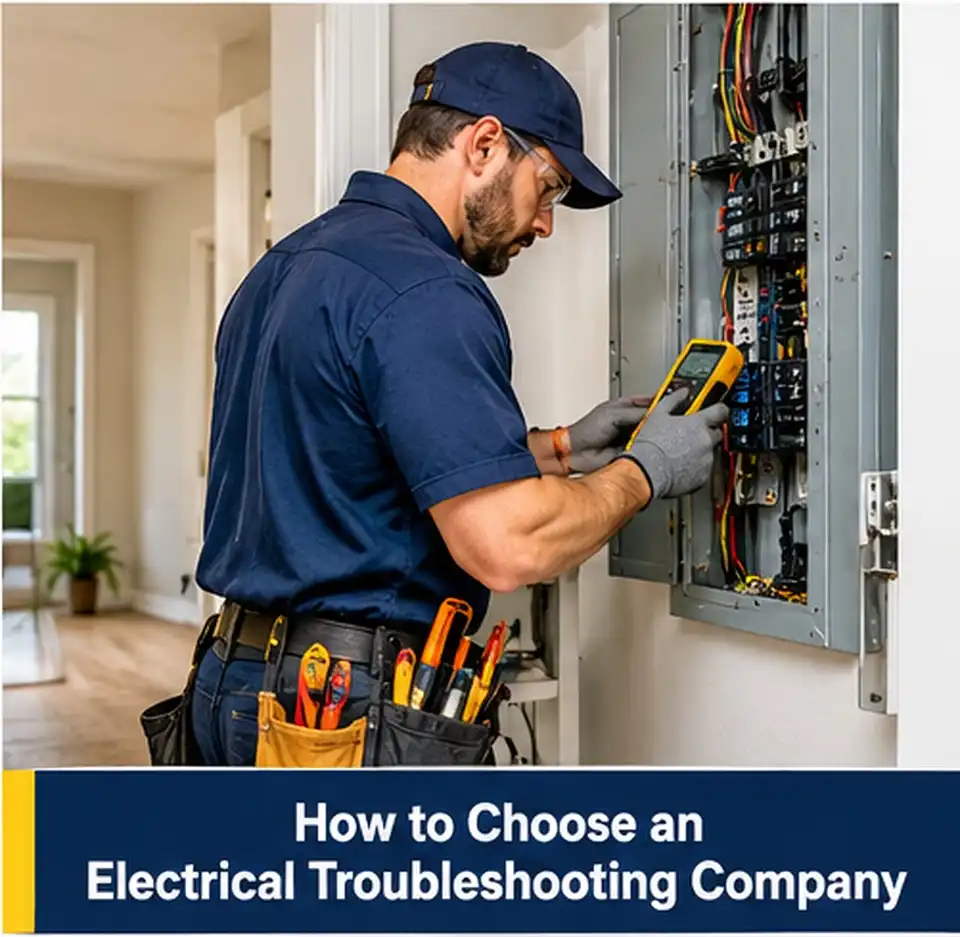
The right electrical troubleshooting company measures, explains, and documents. When you search electrical troubleshooting near me, look past the top ad and check credentials first.
What to Verify Before Work Starts
| Checkpoint | What to Look For |
|---|---|
| State license | Active license with the Alabama Electrical Contractors Board |
| Insurance | General liability and workers’ comp certificates |
| Local permits | Knows city and county permit rules for your address |
| Diagnostic approach | Uses meters and thermal imaging, not guesswork |
| Written quotes | Line-item pricing before repair work |
| Warranty | Clear labor and parts warranty in writing |
| Local experience | Familiar with older Birmingham panels, storms, and humidity |
| Communication | Explains findings in plain language |
At Bob’s Electrical Services, we operate as a Government Certified, fully licensed electrical expert, and we encourage every homeowner to verify credentials directly. Ask for the license number, then look it up with the Alabama Electrical Contractors Board before anyone opens your panel.
If you live outside Alabama, the same rules apply locally. Homeowners researching electrical troubleshooting and repairs Cypress Hills residents in New York or Cypress, Texas, rely on should verify licensing with their own state or city board. In our area, you can check whether your town is covered on our Birmingham-area service communities page, from Trussville to Pelham and Alabaster.
Installing Ground Fault Circuit Interrupter Outlets Safely
Red Flags
- No meter used during diagnosis
- Pressure to replace the panel without a load calculation or measured fault
- No permit offered for panel, service, or new circuit work
- Cash-only pricing with no written quote
- Refusal to share license or insurance details
Your next step: ask any electrician for their Alabama license number on the first call and verify it online before the visit.
Common Mistakes Alabama Homeowners Make
These mistakes show up on our calls across Hoover, Vestavia Hills, and Trussville. Each one turns a simple repair into a bigger job.
- Resetting a breaker over and over. Each reset on a short adds heat damage.
- Upsizing a breaker to stop trips. The wire overheats before the breaker trips.
- Ignoring a warm outlet. Heat means a loose or failing connection.
- Replacing the HVAC fuse repeatedly. A blown 3A fuse means a short somewhere in the 24V circuit.
- Skipping post-storm inspections. Bent masts and loose meter bases let water in.
- Using non-LED dimmers with LED bulbs. This causes flicker, buzzing, and early failure.
- Back-feeding a generator through an outlet. This can kill utility workers and damage your panel.
Electrical troubleshooting and repairs Cypress Hills homeowners and Birmingham families get right usually start with avoiding these seven habits.
Your next step: share this list with everyone in your household who might reset a breaker or run a generator.
Common Questions and Answers
What does an electrical troubleshooting visit include?
A licensed electrician reviews the symptom history, inspects the panel, measures voltage and current, and isolates the fault. You should receive actual readings and a written repair quote.
Why does my AC stop working when every breaker is on?
The 24V control circuit may have failed. Common causes include a blown 3A fuse on the furnace board, a tripped condensate float switch, or a broken thermostat wire.
How much does electrical troubleshooting and repairs Cypress Hills homeowners search for cost in Birmingham?
Diagnostic visits typically run $100 to $250. Common device and breaker repairs add $150 to $450.
Is a warm outlet an emergency?
Yes. Turn off the circuit and call the same day. Heat signals a loose or arcing connection.
Should I replace my Federal Pacific or Zinsco panel?
Most electricians recommend replacement. These panels have documented histories of breakers that fail to trip.
What should I do if storms knock out power to my home?
Stay away from downed lines and call your utility. If your service mast or meter base is damaged, you need a licensed electrician before the utility can reconnect.
What happened with the electrical towers down in Cypress TX?
The May 2024 Houston derecho toppled high-voltage transmission towers near Cypress, Texas, causing long outages. It is a reminder that utility repairs and homeowner-side repairs are separate steps.
How do I find reliable electrical troubleshooting near me?
Verify the contractor’s license with the Alabama Electrical Contractors Board, confirm insurance, and ask how they diagnose faults before quoting.
How often should my home have an electrical inspection?
Every 3 to 5 years for most homes, and after major storms, renovations, or a home purchase. Older homes benefit from more frequent checks.
Can a whole-home surge protector prevent HVAC board failures?
It greatly reduces the risk. Pair a panel-mounted surge protector with plug-in units at sensitive electronics.
Find the Cause, Fix It Once
Electrical faults rarely fix themselves. They get hotter, louder, and more expensive. The right approach is simple: measure first, repair the cause, and verify under load.
Whether you searched for electrical troubleshooting and repairs Cypress Hills homes need or a trusted electrician closer to Birmingham, the same rules protect your family: licensed work, real measurements, and written quotes. Our government-certified team brings that standard to homes across Birmingham, Hoover, Vestavia Hills, Mountain Brook, Homewood, Trussville, Pelham, and Alabaster. Learn more about how we help homeowners on the Bob’s Electrical Services homepage.
If a breaker keeps tripping, an outlet feels warm, or your AC won’t start, call (888) 217-2561 and describe what you’re seeing.