Electric Car Charger Installation Near Me: Know Your Load
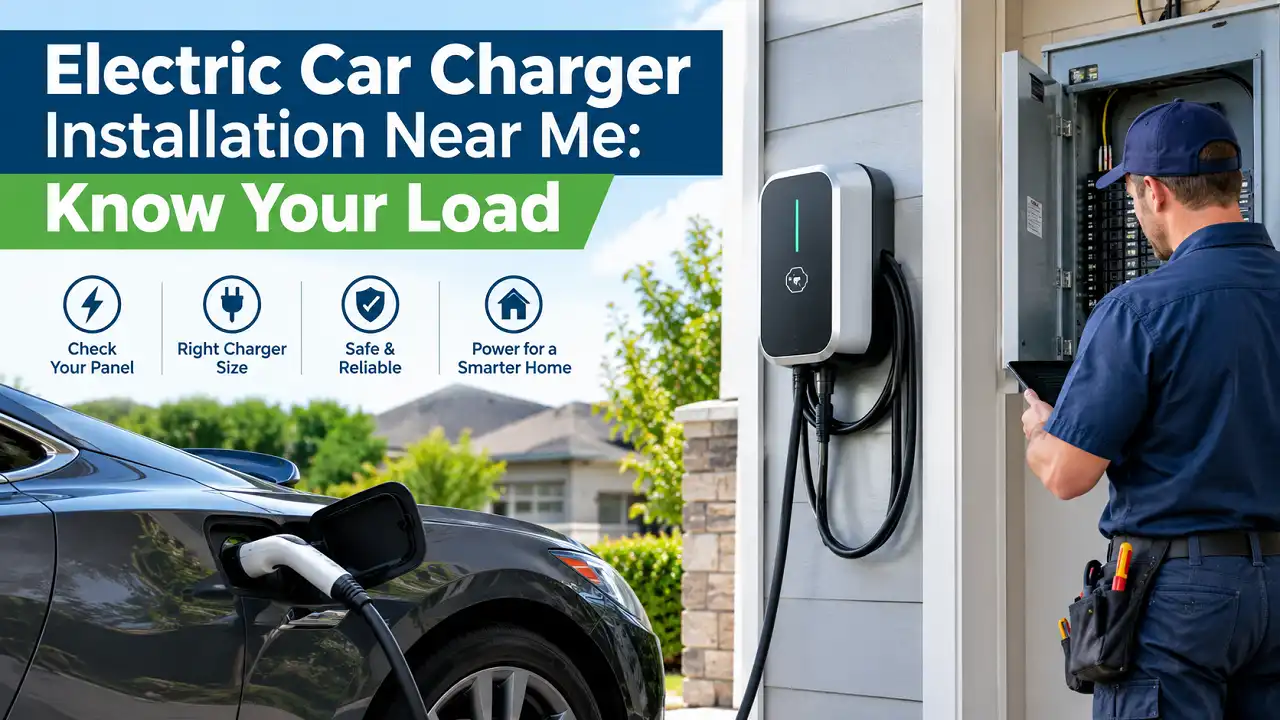
Your EV can charge overnight, but your electrical panel decides how fast and how safely. Most Birmingham homeowners searching for electric car charger installation near me start by shopping for a charger. The panel and wiring should come first. A Level 2 charger adds one of the largest continuous loads your home will ever carry, often 32 to 48 amps for hours at a time. Put that on top of an Alabama summer AC load or a January cold snap with heat strips running, and an undersized panel shows its limits.
That is why you should plan the installation around your home’s electrical capacity before you choose the hardware.
Key Takeaways
- Request a load calculation before you buy a charger. It tells you whether a 40-amp, 48-amp, or load-managed setup fits your panel without an upgrade.
- Size the circuit at 125% of the charger’s rated output. A 48-amp charger needs a 60-amp breaker and matching wire. The National Electrical Code treats EV charging as a continuous load.
- The federal 30C charger credit has ended for new installs. It covered equipment placed in service by June 30, 2026. Budget without it, and check Alabama Power for EV rate options instead.
What an EV Charger Does to Your Home’s Electrical System
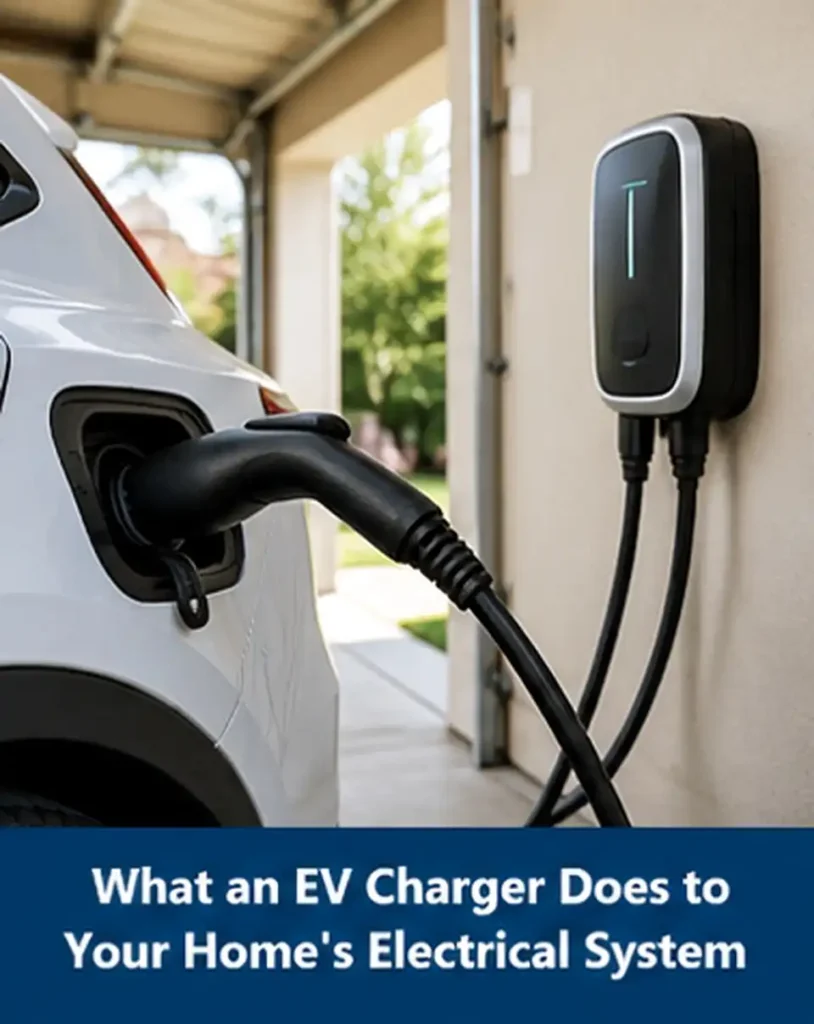
An EV charger is a continuous load, which means it runs at or near full current for three hours or more. That one fact shapes every wiring decision. The circuit breaker, the conductors, and the panel bus all have to handle steady heat, not short bursts.
Electricians in our Birmingham network see this often in older local homes. A 1960s ranch in Homewood or a 1980s two-story in Hoover may still have a 100-amp service. That panel already feeds a central AC condenser, a water heater, a range, and a dryer. Adding a 48-amp charger can push the calculated load past what the service can safely deliver.
Check Also: Which Direction Should a Ceiling Fan Turn in the Summer?
The HVAC Factor Most Homeowners Miss
Your heat pump or AC competes with your charger for the same capacity. If you’ve spent a summer managing cooling loads in Alabama, this makes complete sense. A 3- to 4-ton condenser can draw 15 to 25 amps while running and much more for a moment at startup.
Winter brings a different peak. Many Birmingham-area heat pumps carry auxiliary electric heat strips rated at 5 to 15 kW. On a 25°F morning in Trussville or Pelham, those strips kick on right when an overnight charging session is still running. A panel that handles summer just fine can come up short on the coldest night of the year.
Your next step: find your main breaker rating, printed on the large breaker at the top of your panel, and write it down before you call.
EV Charger Levels Compared: Level 1, Level 2, and DC Fast
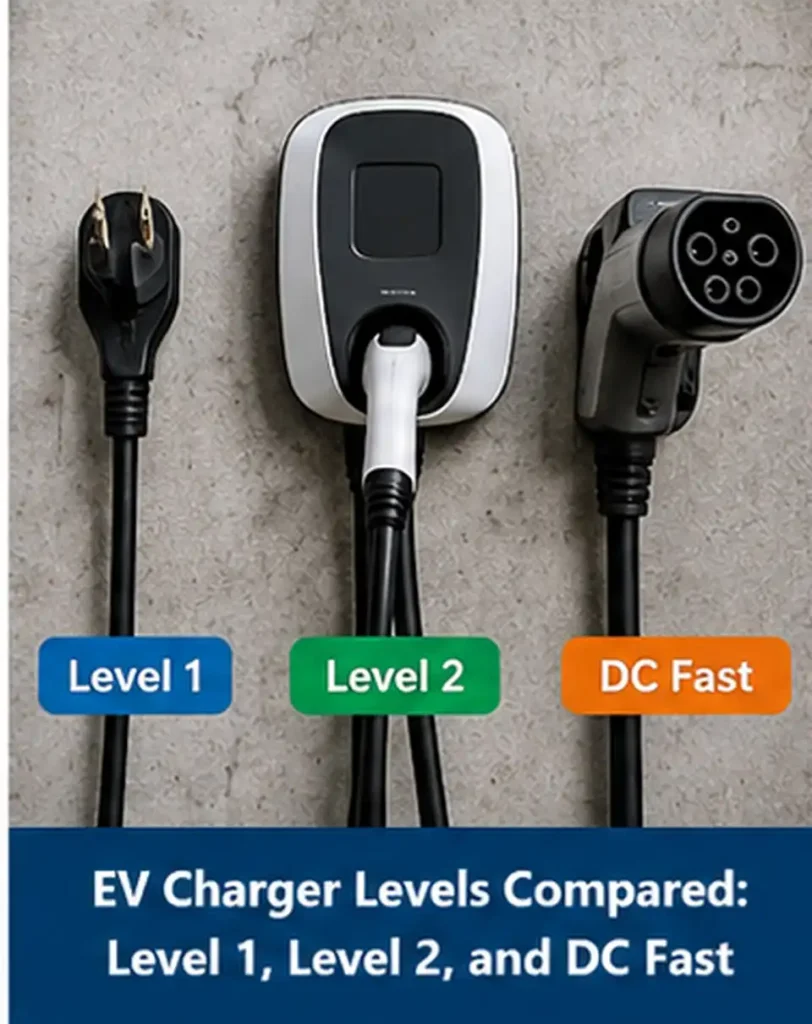
Charging levels describe voltage and power output. For homes, the real choice is between Level 1 and Level 2. DC fast charging needs commercial three-phase power and isn’t practical for a house.
Charging Level Comparison Table
| Feature | Level 1 | Level 2 (Common Home Setup) | DC Fast Charging |
|---|---|---|---|
| Voltage | 120V | 208V to 240V | 400V to 1,000V DC |
| Typical charging current | 12 amps | 32 to 48 amps | 100+ amps DC |
| Required circuit size | 15A or 20A | 40A to 60A dedicated | Commercial three-phase service |
| Power output | About 1.4 kW | 7.7 kW to 11.5 kW | 50 kW to 350 kW |
| Miles of range per hour | 3 to 5 miles | 25 to 45 miles | 150+ miles in 20 to 30 min |
| Full charge (typical EV) | 40 to 50+ hours | 6 to 10 hours | 20 to 60 minutes (to 80%) |
| Residential use | Light commuters only | Best fit for most homes | Not residential |
| Permit usually needed | Rarely | Yes | Yes (commercial) |
Level 1 Pros and Cons
- Pro: Plugs into a standard 120V outlet with no new wiring in many cases.
- Pro: No panel upgrade needed.
- Con: Adds only about 40 miles overnight.
- Con: Long sessions on an old outlet can overheat worn receptacle contacts.
Level 2 Pros and Cons
- Pro: Gives a full battery overnight for nearly every EV.
- Pro: Many units are ENERGY STAR certified and support scheduled charging.
- Con: Needs a dedicated 240V circuit and usually a permit.
- Con: May trigger a panel or service upgrade in older homes.
A Level 1 cord works for a Model 3 driver commuting 15 miles a day from Mountain Brook. A family running two EVs out of Alabaster needs Level 2. Choose the level that matches your daily miles, then size the circuit to fit.
Check Also: How to Install a Ceiling Fan Without Existing Wiring in AL
Wiring Requirements for a Safe Level 2 Installation
Correct wiring follows NEC Article 625, the section of the National Electrical Code that covers EV charging equipment. Alabama jurisdictions enforce the NEC edition they have adopted, so the licensed electrician pulling your permit will work to your city’s code cycle.
Circuit Sizing Table (125% Continuous Load Rule)
| Charger Output | Minimum Breaker | Typical Copper Wire (THHN in Conduit) | Typical NM Cable |
|---|---|---|---|
| 16 amps | 20A | 12 AWG | 12/2 NM-B |
| 24 amps | 30A | 10 AWG | 10/2 NM-B |
| 32 amps | 40A | 8 AWG | 8/2 NM-B |
| 40 amps | 50A | 8 AWG | 6/2 NM-B |
| 48 amps | 60A | 6 AWG | Usually conduit with THHN |
Wire sizes vary with run length, temperature rating, and installation method. A licensed electrician confirms the final size on site.
Hardwired vs. Plug-In (NEMA 14-50)
- Hardwired chargers connect straight to the circuit. They allow higher output, up to 48 amps on a 60-amp circuit, and avoid receptacle wear.
- Plug-in chargers use a NEMA 14-50 receptacle and top out around 40 amps. Code requires GFCI protection on these receptacles, and cheap receptacles can overheat under daily use.
We see melted 14-50 receptacles more than homeowners expect, usually where a bargain outlet was installed for a dryer-style job. For daily charging, a hardwired unit or an industrial-grade receptacle is the safer choice.
Outdoor and Garage Considerations in Alabama Humidity
Birmingham humidity is hard on outdoor electrical gear. Driveway installs need:
- NEMA 3R or 4-rated charger enclosures
- Weatherproof conduit fittings and drip loops
- Proper grounding and bonding to the existing electrode system
- Clearance from sprinklers and downspouts
Your next step: measure the distance from your panel to your parking spot. That number drives wire cost more than anything else.
Panel Load Impact on Birmingham Homes
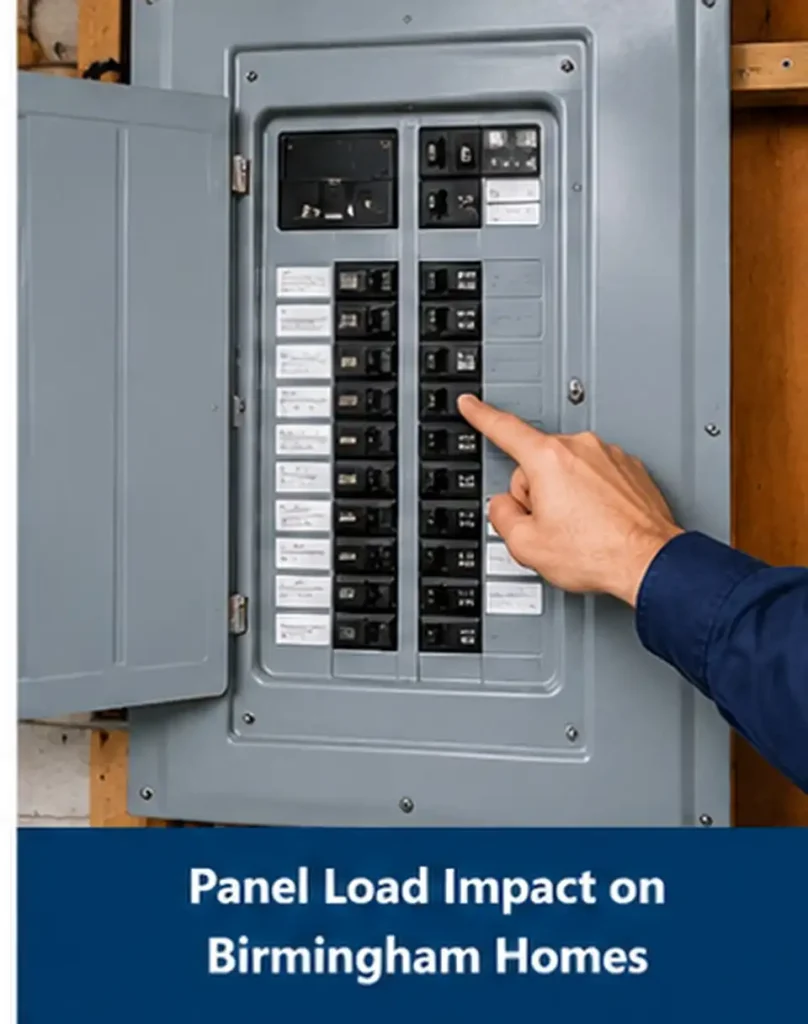
Panel capacity decides whether your project is a simple circuit add or a larger upgrade. An electrician confirms it with a load calculation under NEC Article 220, which totals your home’s demand and compares it to your service rating.
Typical Birmingham Housing Stock vs. Charger Readiness
| Home Era / Area Example | Common Service Size | Level 2 Readiness |
|---|---|---|
| Pre-1960 homes (Homewood, Crestwood, Forest Park) | 60A to 100A | Often needs a service upgrade |
| 1960s to 1980s (Vestavia Hills, Hoover, Center Point) | 100A to 150A | Possible with load management |
| 1990s to 2000s (Trussville, Pelham, Helena) | 150A to 200A | Usually ready for 40A to 48A |
| 2010s+ (Chelsea, Alabaster, newer Hoover subdivisions) | 200A | Ready; check open breaker spaces |
Load Management: The Middle Path
An EV energy management system watches your home’s total current. It turns down the charger when the AC, dryer, or heat strips run. The NEC allows these systems to reduce the calculated load, which can avoid a full service upgrade.
On calls in Vestavia Hills and Hoover, load management often saves homeowners with 100- to 150-amp panels several thousand dollars. It’s one of the most underused tools in residential EV work.
Several chargers now include this function or work with add-on current sensors. Ask the electrician you hire whether your panel qualifies before you agree to a full upgrade. You can browse related panel and wiring work through our residential electrical services page.
Repair vs. Upgrade: What Your Panel Really Needs
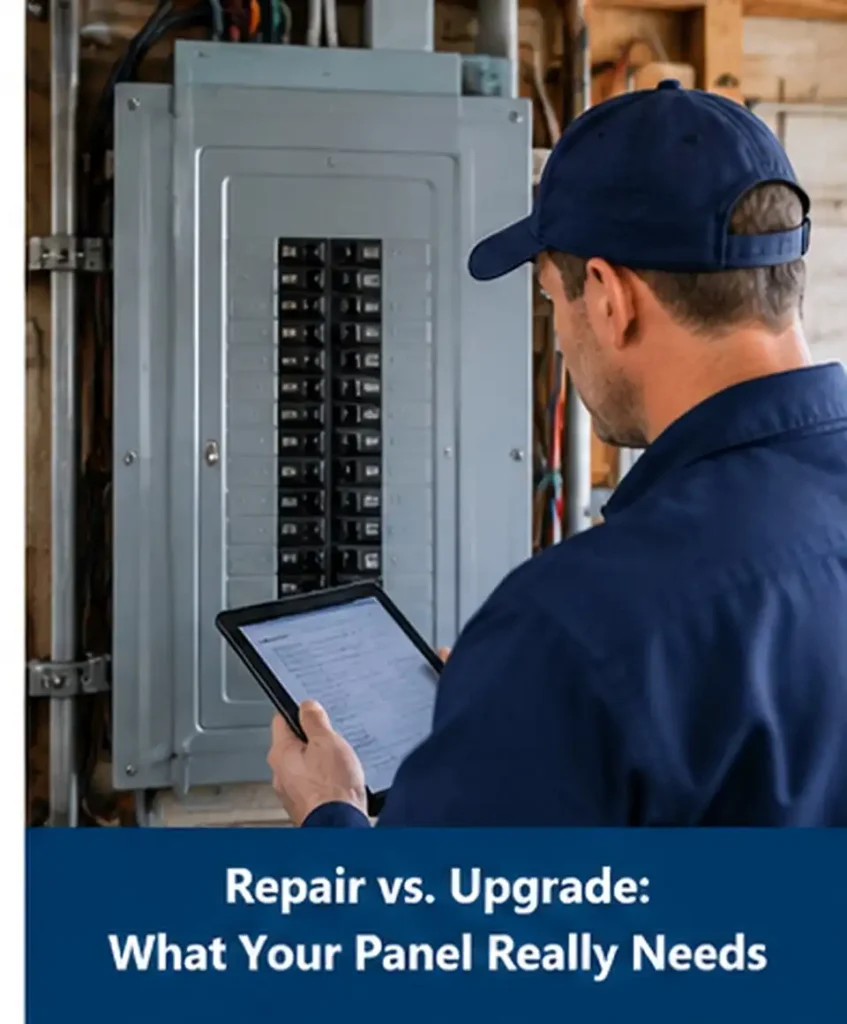
Not every older panel needs replacing. Some need repair, some need load management, and some must go. The table below shows how electricians in our network weigh the choice.
Repair vs. Upgrade Comparison
| Factor | Repair or Add Circuit | Load Management Device | Full Panel or Service Upgrade |
|---|---|---|---|
| Best for | 200A panel with open spaces | 100A to 150A panel near capacity | Undersized, damaged, or recalled panels |
| Typical cost range | $300 to $900 (circuit add) | $400 to $1,200 | $1,800 to $4,500+ |
| Charging speed | Full rated speed | Full speed most hours, reduced at peaks | Full rated speed |
| Utility coordination | Rarely | Rarely | Usually (Alabama Power disconnect/reconnect) |
| Expected service life | Matches existing panel | 10 to 15 years | 25 to 40 years |
| Future-proofing | Limited | Moderate | High (room for a second EV, heat pump, solar) |
Warning Signs That Point to a Panel Replacement
- Federal Pacific Stab-Lok or Zinsco panels, both linked to breakers that fail to trip
- Scorch marks, rust, or a burning smell at the panel
- Breakers that feel warm or trip under normal loads
- Double-tapped breakers or no open spaces
- Aluminum branch wiring with signs of overheating
Our guide to electrical panel upgrades covers these signs in more detail. If you spot any of them, schedule a panel evaluation before planning electric car charger installation near me.
Cost Breakdown for EV Charger Installation in Birmingham
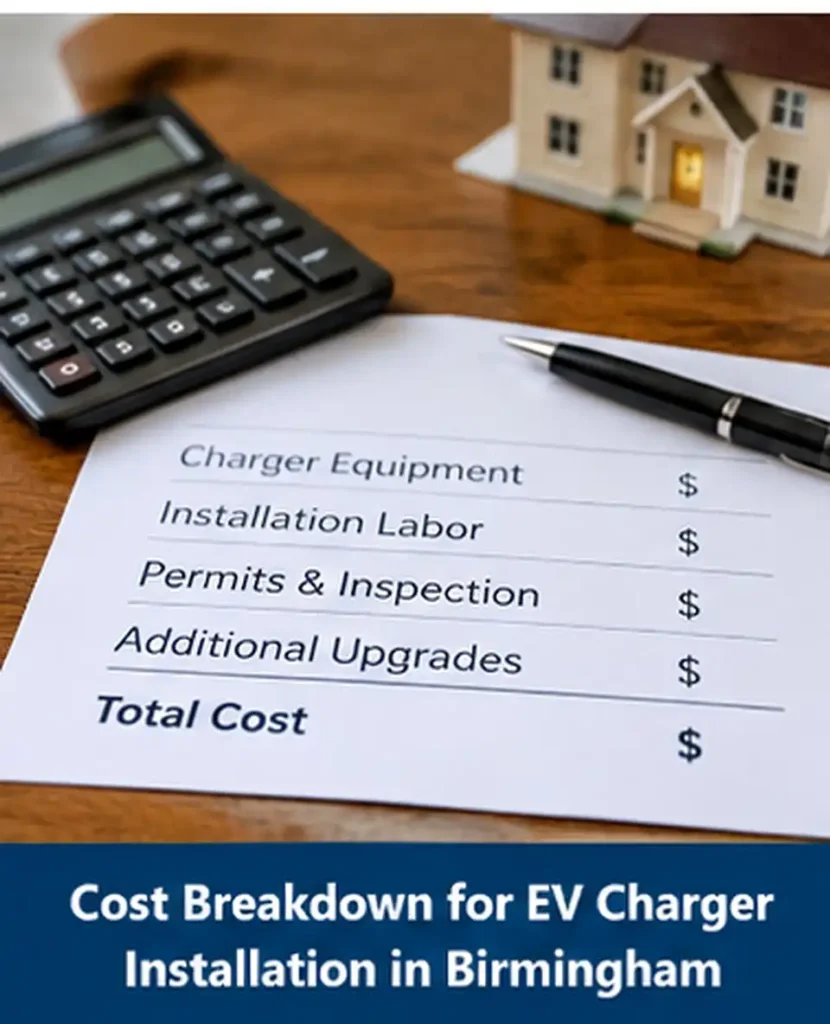
Total cost combines equipment, labor, materials, and permits. The U.S. Department of Energy’s Alternative Fuels Data Center reports residential Level 2 hardware in the $380 to $690 range, with installation running about $1,300 before labor and permit costs in its research data. Real Birmingham-area quotes in 2026 vary with distance and panel condition.
Typical Cost Table (2026, Birmingham Area)
| Cost Item | Low End | Typical | High End |
|---|---|---|---|
| Level 2 charger (hardware) | $350 | $550 | $900+ |
| Circuit install, panel within 20 ft | $400 | $700 | $1,000 |
| Circuit install, 50+ ft run or detached garage | $900 | $1,500 | $2,500+ |
| Permit and inspection fees | $50 | $100 | $250 |
| Load management device | $400 | $700 | $1,200 |
| Panel upgrade (200A) | $1,800 | $2,800 | $4,500+ |
| Trenching (detached garage or driveway post) | $500 | $1,200 | $3,000+ |
What Drives Your Price Up or Down
- Measure the wire run. Copper is the largest material cost, and 6 AWG over 60 feet adds up fast.
- Check panel location. Basement panels in Mountain Brook homes often need longer routes through finished walls.
- Pick output carefully. A 40-amp charger costs less to wire than a 48-amp unit and still adds about 30 miles per hour.
- Ask for a written, itemized quote. Line items keep pricing transparent and easy to compare.
When comparing quotes for electric car charger installation near me, compare the circuit size and wire gauge, not just the bottom line.
Check Also: Installing Ground Fault Circuit Interrupter Outlets Safely
The 30C Federal Tax Credit: What Changed in 2026
The 30C Alternative Fuel Vehicle Refueling Property Credit offered homeowners up to 30% of charger and installation costs, capped at $1,000, in eligible census tracts. Federal law ended the credit for property placed in service after June 30, 2026.
30C Status Table
| Situation | Eligible? |
|---|---|
| Charger installed and working on or before June 30, 2026, in an eligible tract | Yes, claim on your 2026 return (IRS Form 8911) |
| Charger installed after June 30, 2026 | No |
| Home outside an eligible low-income or rural census tract | No, even before the deadline |
If you installed before the cutoff, save your invoice and permit record for tax time.
Savings Options That Still Matter
- Utility rate plans: Alabama Power offers EV and time-of-use rate options. Check current terms directly with your utility.
- Off-peak scheduling: Charging overnight lowers cost and avoids your afternoon AC peak.
- ENERGY STAR equipment: Certified chargers use about 40% less standby energy, according to ENERGY STAR.
Your next step: call your utility and ask which rate plan fits overnight charging.
Permit and Inspection Process in Alabama
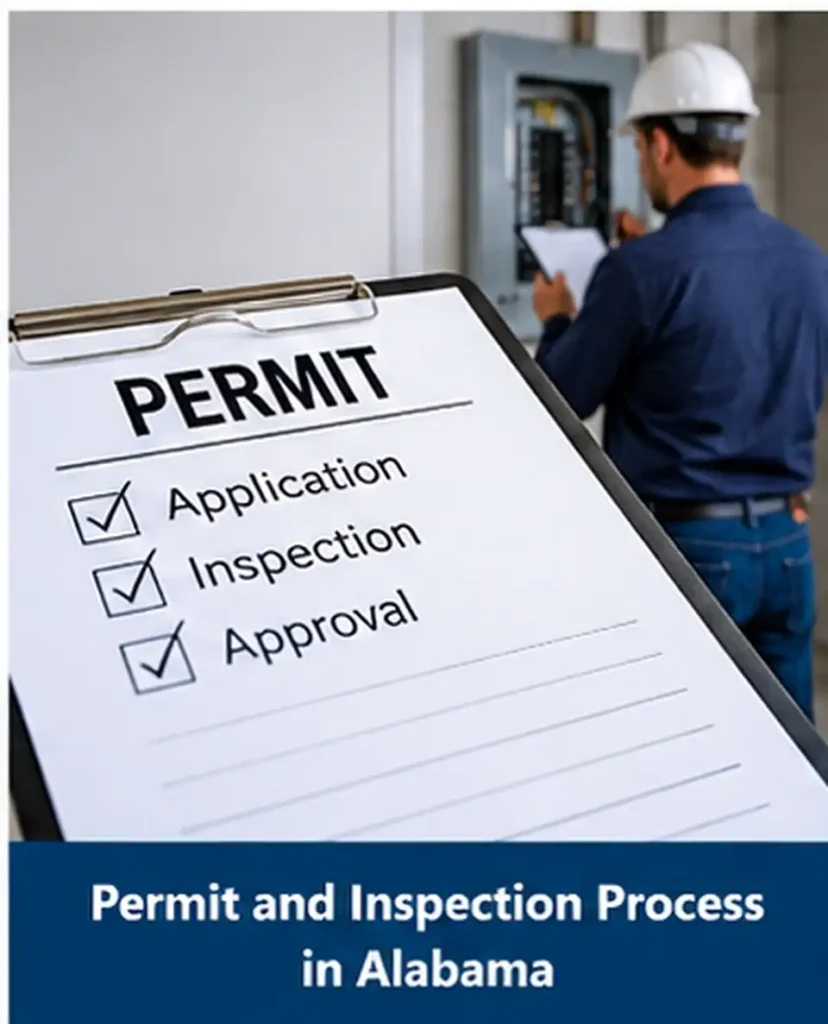
A permitted install protects your homeowners insurance, your resale value, and your family. Alabama requires electrical contractors to hold a license through the Alabama Electrical Contractors Board, a state government licensing body. Cities like Birmingham, Hoover, Vestavia Hills, and Homewood also issue local electrical permits.
Step-by-Step Permit Process
- Verify the license. Look up the contractor with the Alabama Electrical Contractors Board before work starts.
- Confirm insurance. Ask for proof of liability coverage in writing.
- Pull the permit. The licensed electrician files with your city or county building department.
- Complete rough-in work. Some jurisdictions inspect conduit or cable before walls close.
- Pass final inspection. The inspector checks breaker size, wire gauge, grounding, and GFCI protection.
- Keep your records. Store the permit card and invoice with your home documents.
Typical Timeline
| Stage | Typical Time |
|---|---|
| Site visit and quote | 1 to 3 days |
| Permit approval | 1 to 7 business days |
| Installation (simple circuit) | 3 to 6 hours |
| Installation with panel upgrade | 1 to 2 days, plus utility scheduling |
| Final inspection | 1 to 5 business days |
State licensing and local permits form the government oversight behind every safe install. Never let anyone skip them. See which towns we cover on our Birmingham-area service coverage page.
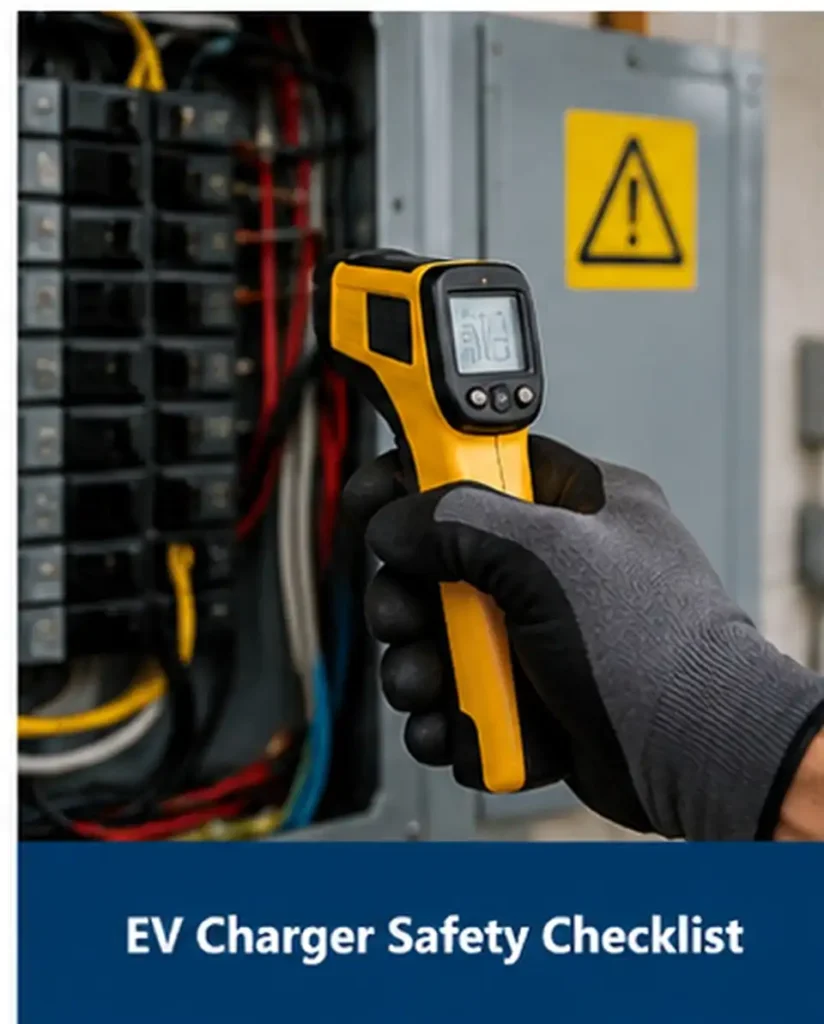
EV Charger Safety Checklist
A safe charger depends on correct installation and ongoing care. Use this checklist before and after your install.
Before Installation
- Confirm the charger carries a UL or ETL listing from a nationally recognized testing lab
- Get a load calculation in writing
- Confirm a dedicated circuit, never shared with other appliances
- Check that the installer is state-licensed and insured
- Plan the location away from standing water and foot traffic
After Installation
- Test the GFCI or the charger’s built-in ground-fault test monthly
- Inspect the cable for cuts, kinks, or crushed sections
- Keep the connector holstered and off the floor
- Feel the plug and receptacle after a session; warm is normal, hot is not
- Never use extension cords or adapters for daily charging
Troubleshooting Common Charger Problems
- Check the breaker first. A tripped 60-amp breaker often points to undersized wire or a failing breaker.
- Read the charger’s status light. Most units flash specific codes for ground faults or overheating.
- Reset the charger. Turn the breaker off for 60 seconds, then back on.
- Look for heat damage. Discoloration at a 14-50 receptacle means stop charging and call an electrician.
- Note the timing. Trips only when the AC or heat strips run usually signal a panel capacity issue.
Breakers that keep tripping during charging should never be ignored. Learn more through our local electrical experts homepage, where problem guides explain safe next steps.
How to Choose the Right Local Installer
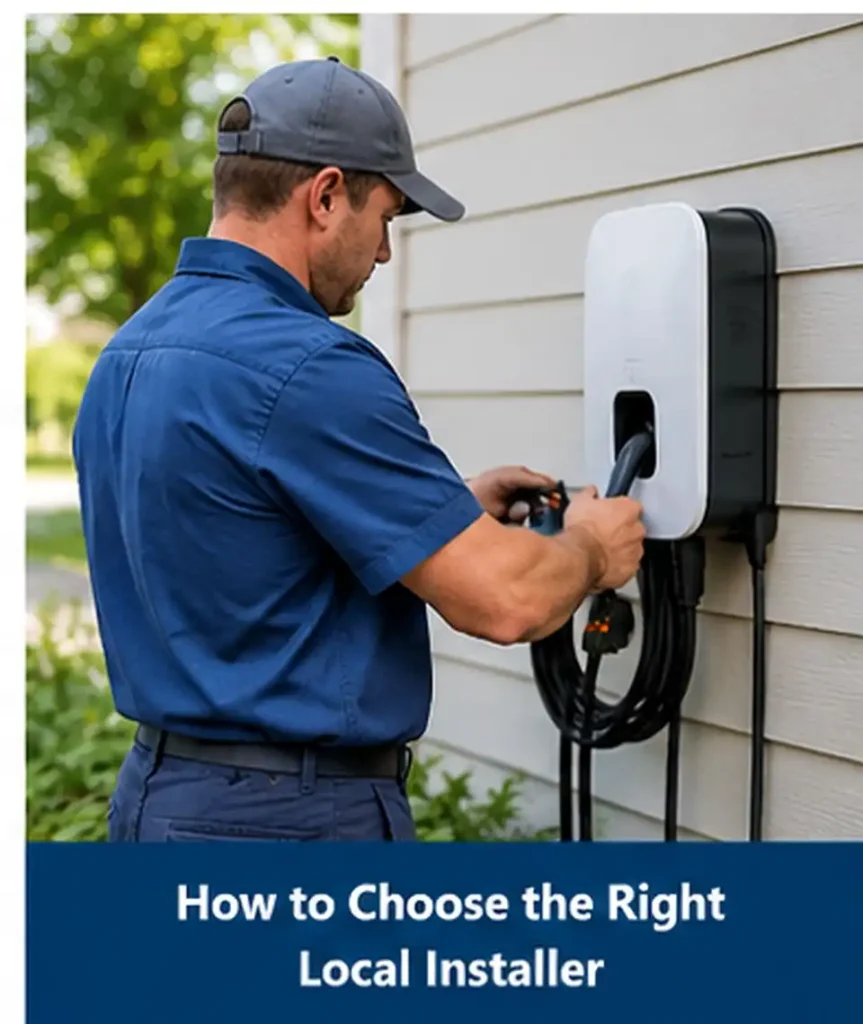
The right installer does more than mount a box on the wall. They check your service size, your HVAC load, and your future plans. A good fit for electric car charger installation near me shows these traits:
| What to Ask | Good Answer | Red Flag |
|---|---|---|
| Will you do a load calculation? | “Yes, in writing.” | “Your panel looks fine.” |
| Who pulls the permit? | “We do, every time.” | “You don’t need one.” |
| What breaker and wire size? | Specific gauge and amperage | Vague answers |
| Is the quote itemized? | Yes, by line item | One lump sum |
| Are you licensed in Alabama? | License number provided | Avoids the question |
Tesla owners can also check Tesla’s certified installer list for Wall Connector work. Many independent licensed electricians install every major brand, including ChargePoint, Emporia, Grizzl-E, and Tesla. You can compare options through our EV charger installation service guide.
FAQs
How long does electric car charger installation near me take?
A simple Level 2 install takes 3 to 6 hours. Add 1 to 2 days if you need a panel upgrade. Permits and inspections add a few business days in most Birmingham-area cities.
Can I install a Level 2 charger on a 100-amp panel?
Sometimes. A load calculation decides it. Many 100-amp homes can run a 32-amp charger with a load management device. Homes with electric heat or ranges often need an upgrade.
Do I need a permit for an EV charger in Birmingham?
Yes, for any new 240V circuit. Birmingham, Hoover, Vestavia Hills, and other area cities require electrical permits. A licensed electrician files it for you.
Is the 30C tax credit still available?
No, not for new installs. The credit ended for chargers placed in service after June 30, 2026. If your charger was working before that date in an eligible tract, you can still claim it on your 2026 return.
What size breaker does a 48-amp charger need?
A 60-amp breaker. EV charging is a continuous load, so the circuit must be rated at 125% of the charger’s output.
Will charging my EV raise my power bill a lot?
A typical EV adds about 250 to 400 kWh per month for average driving. Charging overnight on a time-of-use rate keeps costs lower and avoids your summer AC peak.
Can I install the charger myself?
We don’t recommend it. Alabama requires licensed electrical work for most installs, and an unpermitted circuit can cause insurance claim problems. A 60-amp continuous circuit leaves no room for error.
Plan Your EV Charger Around Your Home, Not the Other Way Around
A safe EV setup starts with your panel capacity, your HVAC load, and correct circuit sizing. Get those right, and your charger runs quietly for years. Skip them, and you risk nuisance trips, melted receptacles, or worse.
Searching for electric car charger installation near me is the easy part. Finding a licensed electrician who calculates your load, pulls the permit, and explains every line item is what protects your home.
Call Bob’s Electrical Services today. One call connects you with an independent, state-licensed local electrician who serves Birmingham, Hoover, Vestavia Hills, Mountain Brook, Homewood, Trussville, Pelham, Alabaster, and nearby communities. Have your main breaker rating and charger model ready. Then confirm the contractor’s license with the Alabama Electrical Contractors Board before work begins.
Editor’s note: The Bob’s Electrical Services website describes itself as a referral service that connects homeowners with independent, licensed local electricians. It does not describe itself as a contractor with its own crews. To keep the article accurate for readers, the copy below uses “we” for the Bob’s network and gives credentials to the licensed electricians homeowners are matched with. It does not claim in-house crews or a “Government Certified” status that the site doesn’t state.