
Installing Ground Fault Circuit Interrupter Outlets Safely
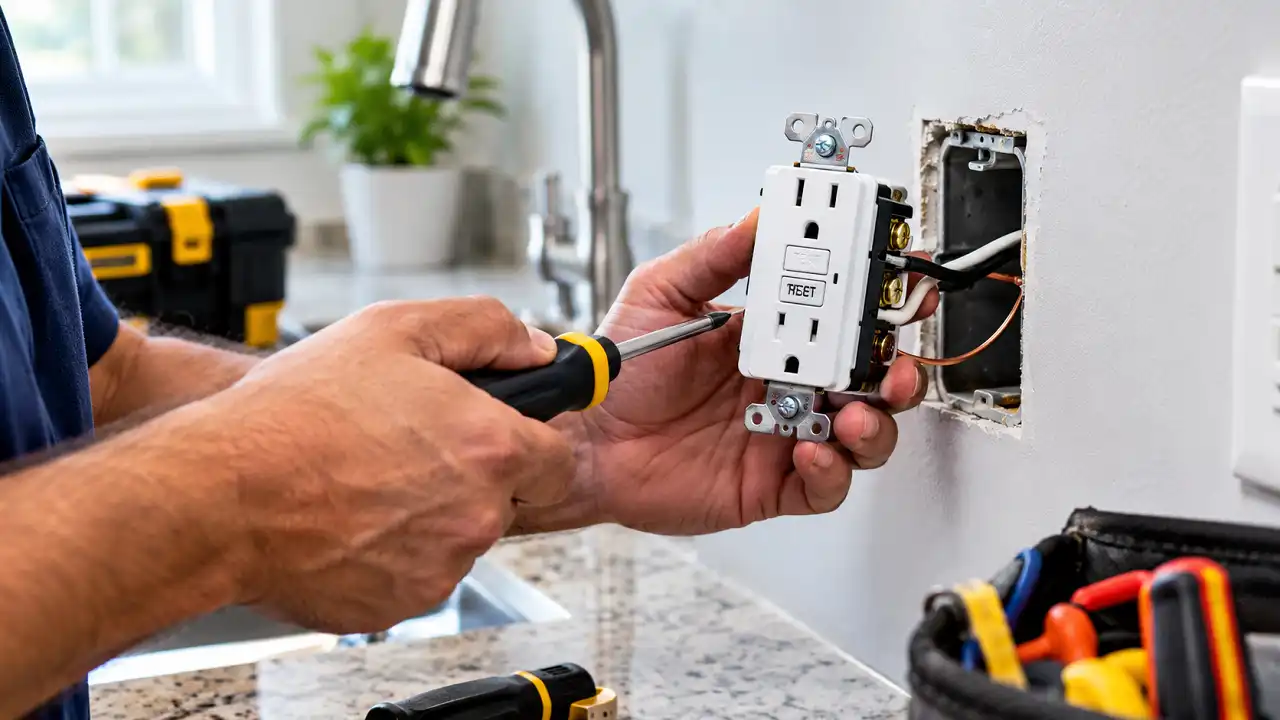
A single wet countertop, a cracked hair dryer cord, or a flooded crawl space can send current through a person instead of the wire. Installing ground fault circuit interrupter outlets is the most direct way to stop that from happening in your Birmingham home. A GFCI watches the current on every circuit it protects. It shuts power off in a fraction of a second when something goes wrong.
This matters for every property owner. Code requirements have expanded, HVAC exceptions have expired, and older Alabama homes often miss protection they now need.
Key Takeaways
- Wiring direction matters. Power from the panel lands on the LINE terminals. Only connect LOAD terminals if you want downstream outlets protected too.
- Code reach has grown. Current NEC rules cover kitchens, bathrooms, garages, basements, laundry areas, and outdoor outlets, including outdoor HVAC equipment now that the temporary exception expired on September 1, 2026.
- Test monthly and replace when needed. A GFCI that won’t trip or reset is not protecting anyone. Plan on replacement every 10 to 15 years, or sooner in damp, humid spaces.
What a GFCI Does and How It Works
A ground fault circuit interrupter compares the current going out on the hot wire with the current coming back on the neutral wire. Those two numbers should match. When they don’t, current is leaking somewhere, possibly through your body.
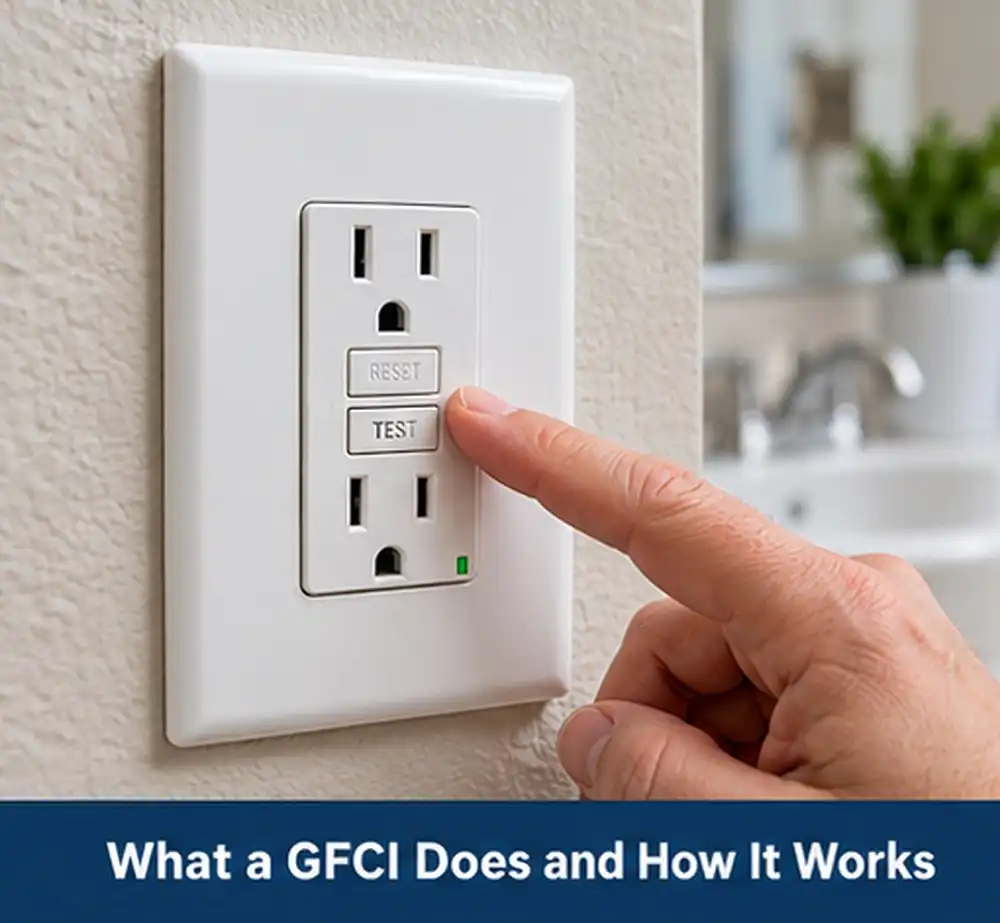
A standard residential GFCI (called Class A) trips at about 4 to 6 milliamps of imbalance. That is far below the level that can stop a human heart. The device can cut power in as little as 1/40 of a second.
GFCI vs. Other Protective Devices
| Device | What It Detects | Trip Threshold | Main Job |
|---|---|---|---|
| Class A GFCI | Current leaking to ground | 4 to 6 mA | Protects people from shock |
| GFPE (equipment protection) | Larger ground faults | About 30 mA | Protects equipment and heat tape |
| AFCI | Dangerous arcing in wires | Arc signature | Prevents electrical fires |
| Dual-Function GFCI/AFCI | Both ground faults and arcs | 4 to 6 mA plus arc detection | Shock and fire protection |
| Standard Breaker | Overload and short circuit | 15A, 20A, etc. | Protects wiring, not people |
Here is the simplest way to think about it. A regular breaker protects the house. A GFCI protects the person standing in it.
Why Alabama Homes Need Extra Attention
If you’ve spent a summer in Alabama, you know moisture finds its way everywhere. High humidity, summer storms, and damp crawl spaces all raise the risk of ground faults. Our government-certified Birmingham electricians frequently see corroded outlets on back porches in Homewood and Mountain Brook. Those outlets often date to the 1960s and have no shock protection at all.
Where the Code Requires GFCI Protection in 2026
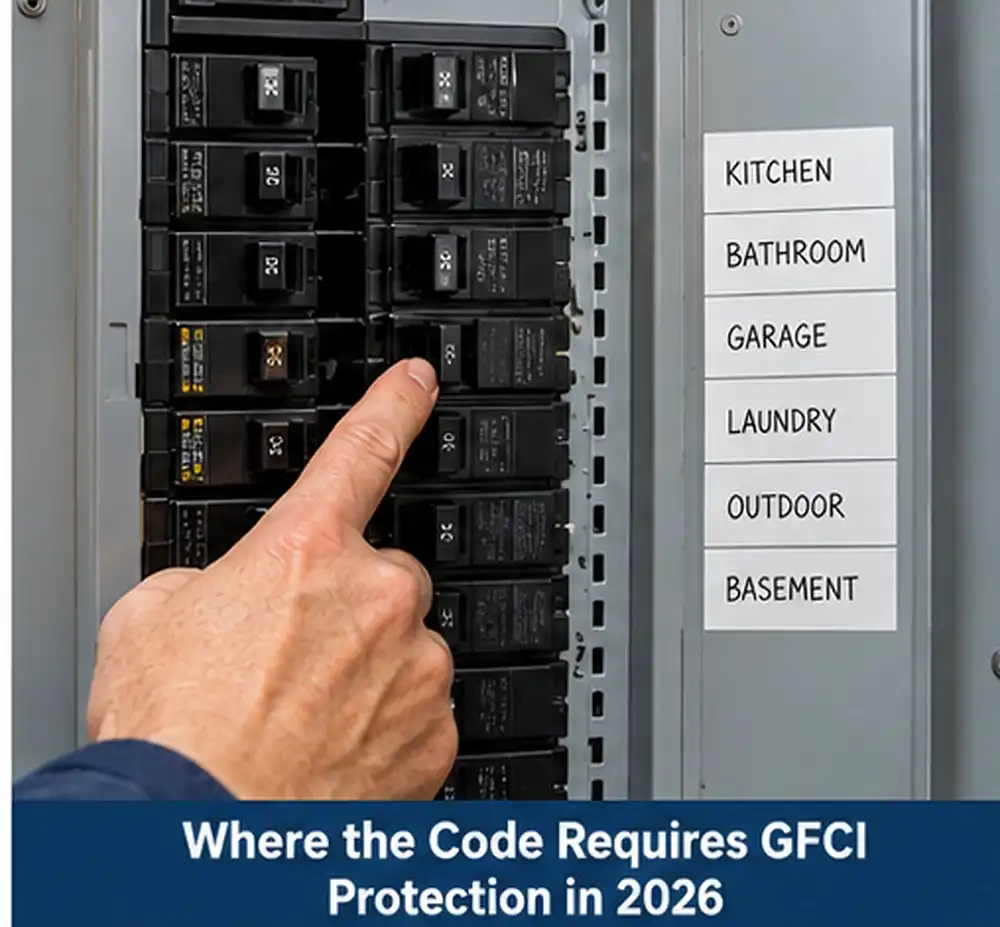
The National Electrical Code (NEC) is published by the National Fire Protection Association. Section 210.8 lists where GFCI protection is required. The list has grown with almost every code cycle. It started near pools in the 1970s and now covers most of a modern home.
Before installing ground fault circuit interrupter outlets, we confirm which NEC edition your local jurisdiction enforces. In Alabama, adoption varies by city and county. A permit in Pelham may follow a different edition than one in Trussville.
Dwelling Unit GFCI Locations (NEC 210.8)
| Location | Requirement | Field Notes From Our Crews |
|---|---|---|
| Bathrooms | All receptacles | Includes outlets near tubs and showers |
| Kitchens | All receptacles (2023 NEC and later) | No longer limited to countertop outlets |
| Garages & Accessory Buildings | All receptacles | Freezer and garage door opener outlets included |
| Outdoors | All receptacles | Must also be weather-resistant (WR) |
| Basements | Finished and unfinished | Sump pumps are no longer exempt |
| Crawl Spaces | At or below grade | Very common in older Birmingham homes |
| Laundry Areas | All receptacles | Covers washer and dryer outlets |
| Sinks | Within 6 ft of the bowl edge | Wet bars and utility sinks count |
| Boathouses | All receptacles | Relevant near Lay Lake and Logan Martin |
| Specific Appliances | Dishwashers, ranges, ovens, dryers, microwaves, disposals | Often protected with a GFCI breaker |
The HVAC Exception Has Expired
This is the biggest change for 2026. NEC 210.8(F) requires GFCI protection for outdoor outlets, and that includes air conditioners and heat pumps. The 2023 NEC allowed a temporary exception for listed HVAC equipment. That exception expired September 1, 2026.
What this means for your home:
- New outdoor condenser and heat pump installs in jurisdictions on the 2023 NEC need GFCI protection.
- Some variable-speed inverter compressors can cause nuisance trips on GFCI breakers. Equipment and breaker compatibility matters.
- The service receptacle within 25 feet of your HVAC unit (NEC 210.63) needs GFCI protection because it sits outdoors.
- The 24-volt thermostat control wiring isn’t the issue. The GFCI sits on the 240-volt supply feeding the condenser.
On recent service calls in Vestavia Hills and Hoover, we’ve coordinated with HVAC contractors on exactly this. If you’ve spent a summer managing cooling loads in Alabama, this setup makes complete sense. A tripped condenser in July is a serious problem, so we match breaker type, equipment listing, and wiring before the inspection.
Types of GFCIs: Outlet, Breaker, and Portable
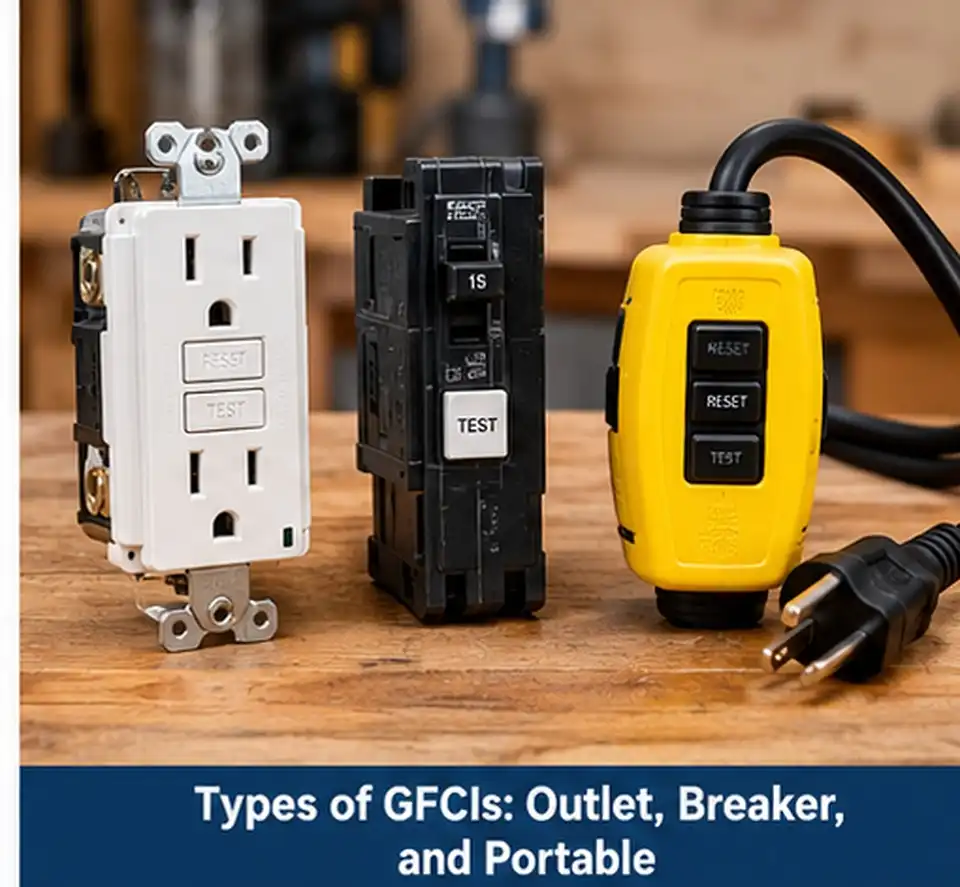
You have three main choices. Each has a place, and the right pick depends on the room, the wiring layout, and your budget. When installing ground fault circuit interrupter outlets versus breakers, we weigh how easy it will be to reset after a trip.
| Type | Installed At | Protects | Reset Location | Best For |
|---|---|---|---|---|
| GFCI Receptacle | Wall box | That outlet plus any LOAD outlets | At the outlet | Kitchens, bathrooms, single locations |
| GFCI Breaker | Electrical panel | The entire circuit | At the panel | Dishwashers, HVAC, hard-to-reach outlets |
| Dual-Function Breaker | Electrical panel | Entire circuit (shock + arc) | At the panel | Kitchens and laundry needing AFCI too |
| Portable GFCI | Plugs into an outlet | Only what plugs into it | On the device | Power tools, temporary outdoor use |
| Dead-Front GFCI | Wall box (no outlet slots) | Downstream outlets | At the device | Protecting hidden or hard-to-reach outlets |
GFCI Receptacle: Pros and Cons
Pros
- Easy reset right where you use power
- Lower cost than most GFCI breakers
- Can protect downstream outlets when wired to LOAD
Cons
- Takes up more room in the wall box
- Exposed to moisture and wear in kitchens and outdoors
GFCI Breaker: Pros and Cons
Pros
- Protects every outlet and appliance on the circuit
- Ideal for hardwired equipment like dishwashers
- No bulky device crammed into a small box
Cons
- Higher price per unit
- Every reset means a trip to the panel
- Must be listed for your specific panel brand
Voltage and Wiring Comparison
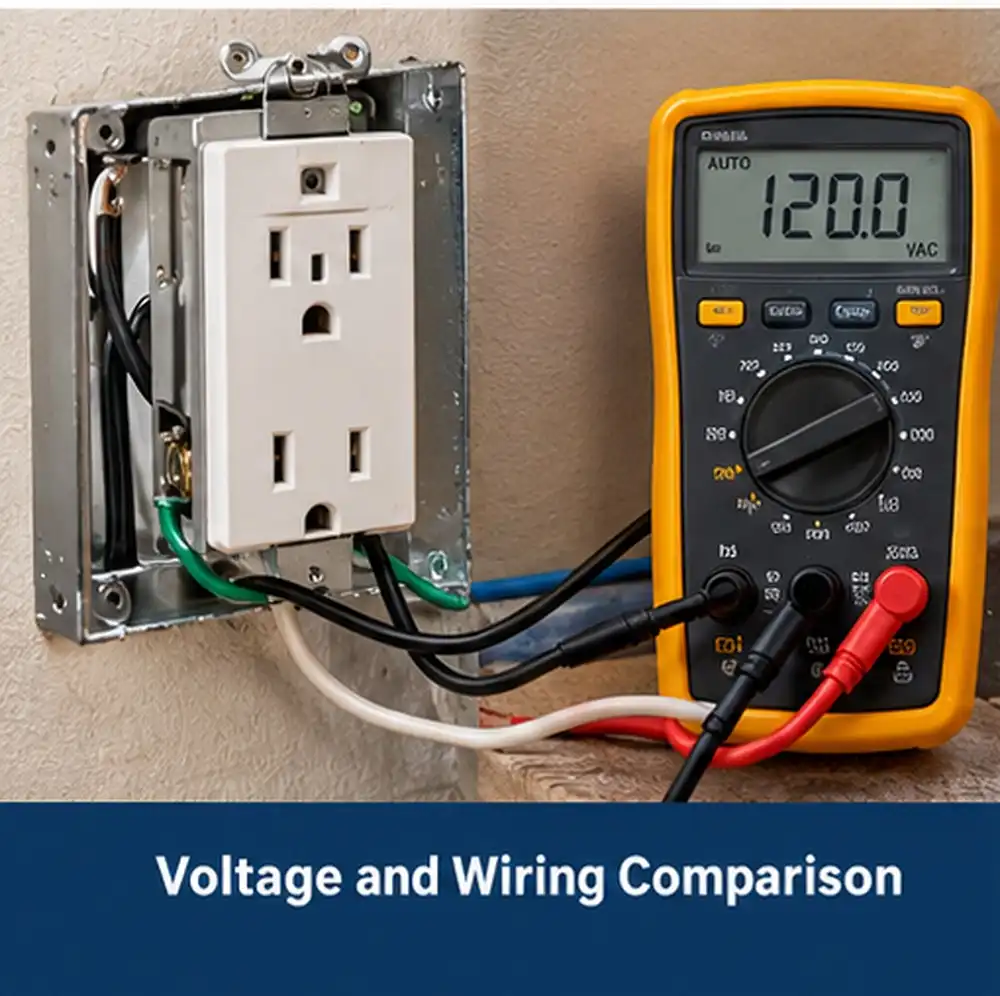
Not every circuit is wired the same way. Our Birmingham service crews notice a wide mix of wiring, from modern NM-B cable to ungrounded two-wire circuits in pre-1960s homes.
| Circuit Type | Wire Size (Copper) | Typical GFCI Choice | Key Consideration |
|---|---|---|---|
| 120V, 15A | 14 AWG | 15A GFCI receptacle | Most bedroom and bathroom circuits |
| 120V, 20A | 12 AWG | 15A or 20A GFCI (20A feed-through) | Kitchen and bathroom circuits |
| 240V, 30A to 60A | 10 to 6 AWG | 2-pole GFCI breaker | Dryers, ranges, HVAC condensers |
| Two-Wire (No Ground) | Varies | GFCI receptacle | Label: “No Equipment Ground” |
| Multiwire Branch Circuit | Shared neutral | 2-pole GFCI breaker | Shared neutral causes instant trips on single-pole GFCIs |
| Aluminum Branch Wiring | Varies | Requires CO/ALR-rated methods | Common in late 1960s to 1970s homes |
A Note on Older Two-Wire Homes
The NEC allows a GFCI to replace an ungrounded outlet. The GFCI still provides shock protection without a ground wire. However, the outlet and any downstream outlets must be marked “No Equipment Ground” and “GFCI Protected.” It won’t provide a ground path for surge protectors or sensitive electronics.
Before You Start: Tools and Materials
Good prep prevents most mistakes. Here is what we bring to every GFCI job.
Tools
- Non-contact voltage tester and a plug-in GFCI tester
- Multimeter for confirming line wires
- Wire strippers and needle-nose pliers
- Flathead and Phillips screwdrivers
- Insulated gloves and a flashlight
Materials
- Tamper-resistant (TR) GFCI for indoor use (required in dwellings)
- Weather-resistant (WR) GFCI for outdoor and damp spots
- In-use (“bubble”) cover for outdoor wet locations
- Deep wall box if the existing box is crowded
- “GFCI Protected” stickers for downstream outlets
Step-by-Step: Installing Ground Fault Circuit Interrupter Outlets
This is the process our licensed crews follow. It’s shared for understanding, not as a substitute for a licensed electrician. Alabama requires licensed work and permits for many electrical jobs.
- Shut off the breaker. Label it so no one turns it back on.
- Verify power is off. Test every wire with a non-contact tester, then confirm with a multimeter.
- Remove the old outlet. Pull it out gently without nicking the insulation.
- Identify the LINE wires. Separate the wires, restore power briefly, and find the pair that is hot. That pair comes from the panel. Shut power back off.
- Mark the wires. Tape the LINE pair so you don’t mix them up.
- Connect the LINE wires. Black (hot) goes to the brass LINE screw. White (neutral) goes to the silver LINE screw.
- Connect LOAD wires (optional). Only if you want downstream protection. Remove the yellow warning tape first.
- Connect the ground. The bare or green wire goes to the green screw.
- Tighten and tug-test. Loose terminals cause arcing and heat.
- Fold wires and mount. Avoid crowding the box. Overfilled boxes are a code violation.
- Restore power and test. Press TEST (power should cut off), then RESET.
- Label downstream outlets. Add “GFCI Protected” stickers to every outlet on the LOAD side.
Most modern GFCIs won’t reset if LINE and LOAD are reversed. That built-in protection catches the most common wiring mistake we see.
Line vs. Load: How Downstream Protection Works
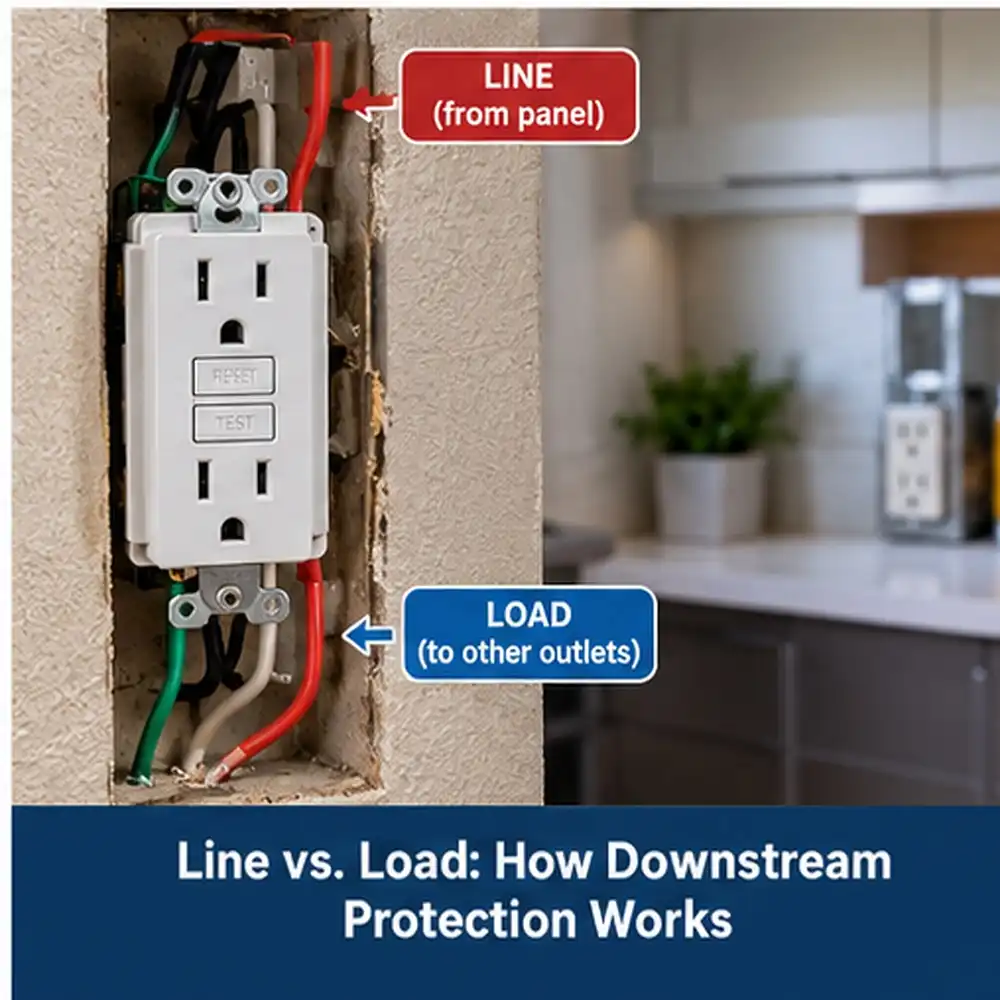
One GFCI can protect several outlets. When installing ground fault circuit interrupter outlets at the first box on a circuit, we can wire the LOAD terminals to feed the rest. Every outlet past that point gets shock protection.
| Wiring Method | Outlets Protected | Cost | Trip Behavior | Best Use |
|---|---|---|---|---|
| LINE Only | Just the GFCI itself | Lowest | Only that outlet loses power | Isolated outlets, refrigerators |
| LINE + LOAD | GFCI plus all downstream outlets | Low | All downstream outlets lose power | Bathrooms, garages, porches |
| GFCI Breaker | Entire circuit | Higher | Whole circuit loses power | Appliances, HVAC, hard-to-reach outlets |
| Multiple GFCIs on One Circuit | Each independently | Highest | Only the tripped device | Kitchens with many countertop outlets |
The “Dead Bathroom Outlet” Mystery
This one comes up all the time. A homeowner in Alabaster calls because a bathroom outlet stopped working. The breaker looks fine. The culprit is often a tripped GFCI in a different room, like the garage or the other bathroom. You can’t tell an outlet is protected just by looking at it, which is why labels matter so much.
Repair vs. Upgrade
Not every GFCI issue calls for the same fix. This table helps sort it out.
| Situation | Repair or Replace Device | Upgrade the System | Why |
|---|---|---|---|
| GFCI won’t reset after testing | ✔ | Device is likely at end of life | |
| Outlet is 10+ years old | ✔ | Older units may fail silently | |
| Scorch marks or melted plastic | ✔ (plus inspection) | Signals loose connections or overheating | |
| Frequent trips with nothing plugged in | ✔ | Points to moisture or damaged wiring | |
| No GFCI in kitchen or bath | ✔ | Below current code | |
| New outdoor AC or heat pump | ✔ | GFCI breaker needed under 210.8(F) | |
| Two-wire wiring throughout | ✔ | GFCIs help, but rewiring adds grounding | |
| Panel won’t accept GFCI breakers | ✔ | Obsolete panels may need replacement |
Our full list of residential electrical services covers both quick device swaps and full panel upgrades.
Device Lifespan at a Glance
| Condition | Typical Lifespan | Our Recommendation |
|---|---|---|
| Indoor, dry room | 15 to 25 years | Test monthly, replace if it fails |
| Bathroom or kitchen | 10 to 15 years | Check yearly for wear |
| Outdoor, covered | 7 to 10 years | Use WR-rated devices |
| Outdoor, exposed | 5 to 7 years | Add an in-use cover |
Alabama’s humidity shortens these numbers. We see corrosion on outdoor devices years earlier than in drier climates.
Cost Factors for GFCI Work in Birmingham

Pricing depends on access, wiring condition, and device type. The figures below are typical industry ranges, not quotes. Costs for installing ground fault circuit interrupter outlets climb when we find damaged wiring or overcrowded boxes.
| Cost Factor | Typical Range | What Drives the Price |
|---|---|---|
| Standard GFCI receptacle (device only) | $15 to $35 | Brand, TR/WR rating, self-test feature |
| Dual-function GFCI/AFCI receptacle | $40 to $60 | Added arc protection |
| GFCI breaker (device only) | $40 to $120 | Panel brand, single vs. 2-pole |
| Installed GFCI outlet (replacement) | $100 to $250 | Box condition, accessibility |
| New outlet location (new circuit) | $250 to $600+ | Wire runs, wall type, permit |
| Outdoor GFCI with in-use cover | $175 to $400 | Weatherproof box and cover |
| 2-pole GFCI breaker for HVAC | $200 to $450 installed | Breaker cost, compatibility testing |
At Bob’s Electrical Services, we give upfront pricing before any work begins. No surprises on the invoice.
GFCI Safety Checklist
Use this list for a quick home review. When installing ground fault circuit interrupter outlets or checking existing ones, every item should get a yes.
- ☐ Every bathroom outlet is GFCI protected
- ☐ All kitchen outlets are protected, not just countertop ones
- ☐ Garage outlets, including freezer and opener outlets, are protected
- ☐ Outdoor outlets have WR-rated GFCIs and in-use covers
- ☐ Crawl space and basement outlets are protected
- ☐ Laundry outlets are protected
- ☐ Downstream outlets have “GFCI Protected” labels
- ☐ You press TEST and RESET monthly
- ☐ No outlets feel warm or show discoloration
- ☐ Your outdoor HVAC circuit meets current code
Troubleshooting a GFCI That Trips or Won’t Reset
Most GFCI problems follow a pattern. Start with the simple steps before assuming the device is bad.
Quick Steps to Troubleshoot
- Unplug everything on the circuit, then press RESET.
- Check the breaker in your panel.
- Look for other GFCIs upstream in nearby rooms.
- Plug devices back in one at a time to find a faulty appliance.
- Check outdoor outlets for water inside the box.
- If it still trips, stop and call a licensed electrician.
| Symptom | Likely Cause | What to Do |
|---|---|---|
| Won’t reset at all | No power, reversed LINE/LOAD, or end of life | Check breaker, then call us |
| Trips after rain | Water in an outdoor box or cover | Dry it out, upgrade the cover |
| Trips with one appliance | Faulty appliance or worn cord | Replace or repair the appliance |
| Trips randomly, nothing plugged in | Moisture, damaged wire, or shared neutral | Professional inspection needed |
| Trips when the AC starts | Inverter compressor leakage current | Compatibility check with HVAC contractor |
| Several outlets dead | Tripped upstream GFCI | Find and reset the protecting GFCI |
| Warm or buzzing device | Loose connection | Turn off breaker, call immediately |
The OSHA electrical safety resources list missing ground-fault protection among the most frequent causes of electrical injuries. That applies at home just as much as on a jobsite.
When to Call a Licensed Pro
Some GFCI jobs look simple but hide bigger issues. Call a licensed electrician when you see:
- Aluminum wiring or cloth-insulated wire
- No ground wire and you need grounded outlets
- Shared-neutral (multiwire) circuits
- Burn marks, melted plastic, or a burning smell
- A panel that won’t accept GFCI breakers
- HVAC or 240-volt equipment needing protection
- Repeated trips with no clear cause
Bob’s Electrical Services is a Government Certified, fully licensed contractor. Our crews know Alabama code adoption, pull the right permits, and test every device before we leave. Check our Birmingham area service to confirm we cover your neighborhood. We’re available 7 days a week for emergencies too.
FAQs
How often should I test a GFCI outlet?
Once a month. Press TEST, confirm power is off, then press RESET.
Can a GFCI work without a ground wire?
Yes. It still protects people from shock. The outlet must be labeled “No Equipment Ground.”
Should my refrigerator be on a GFCI?
Under the 2023 NEC, all kitchen outlets need protection. Modern fridges rarely cause trips. Older units sometimes do, which may signal appliance wear.
Why does my GFCI trip during thunderstorms?
Moisture in outdoor boxes and power surges are the usual causes. A whole-home surge protector helps with the second one.
Is a GFCI breaker better than a GFCI outlet?
Neither is better overall. Breakers protect the whole circuit. Outlets offer easier resets.
What is a self-test GFCI?
Since 2015, UL standards require GFCIs to auto-monitor their own function. Many models deny power if protection fails.
Do I need a permit for GFCI work in Alabama?
Like-for-like swaps are often minor. New circuits and panel work usually need permits. Rules vary by city.
Does a GFCI protect against fires?
Not fully. A GFCI targets shock. For fire protection from arcing, you need an AFCI or dual-function device.
Protect Your Home Before the Next Trip
You now know where GFCIs are required, how LINE and LOAD wiring works, and which signs mean it’s time for an upgrade. Installing ground fault circuit interrupter outlets is one of the most cost-effective safety moves you can make in an Alabama home. Walk through the checklist above this weekend. Press TEST on every GFCI and note any that fail.
If you find gaps, our team is ready to help. Contact our licensed Birmingham electricians for transparent pricing, code-compliant work, and straight answers without the jargon.